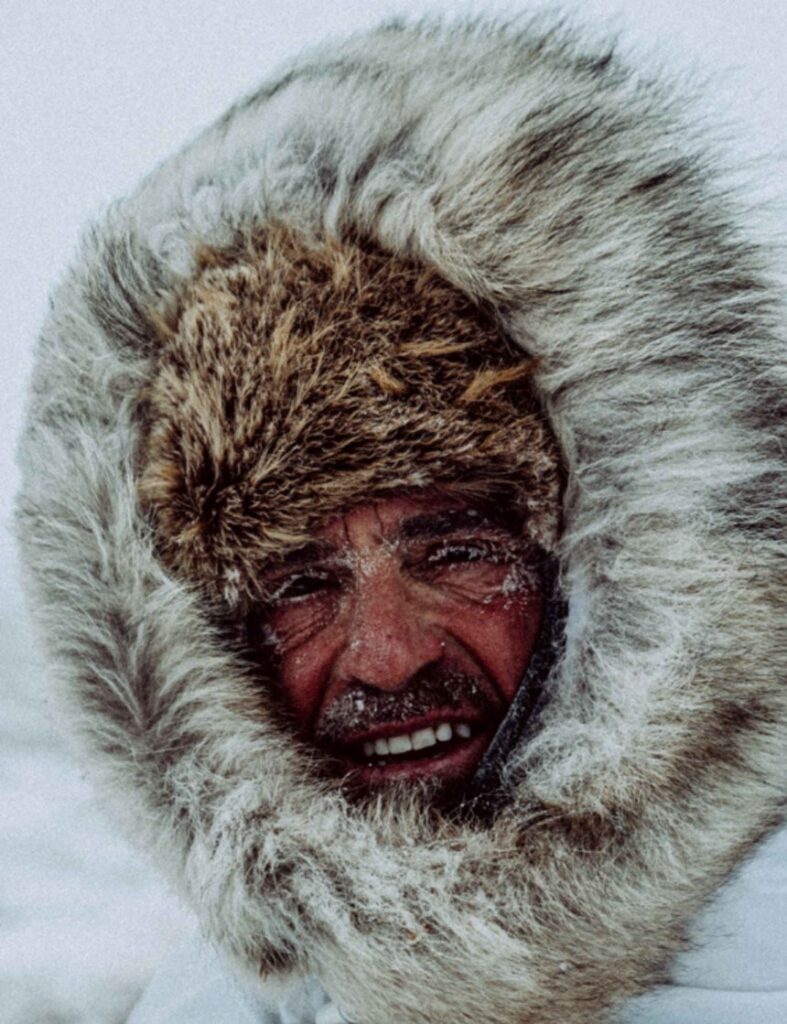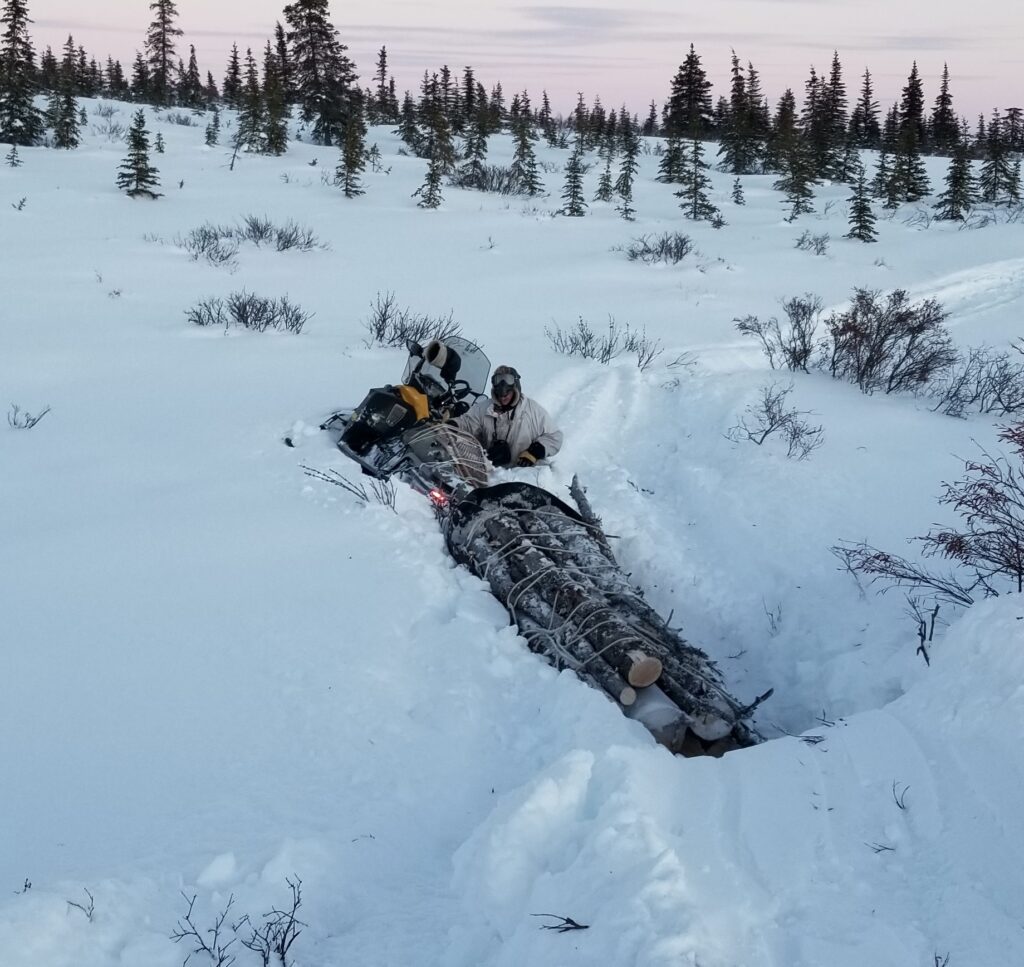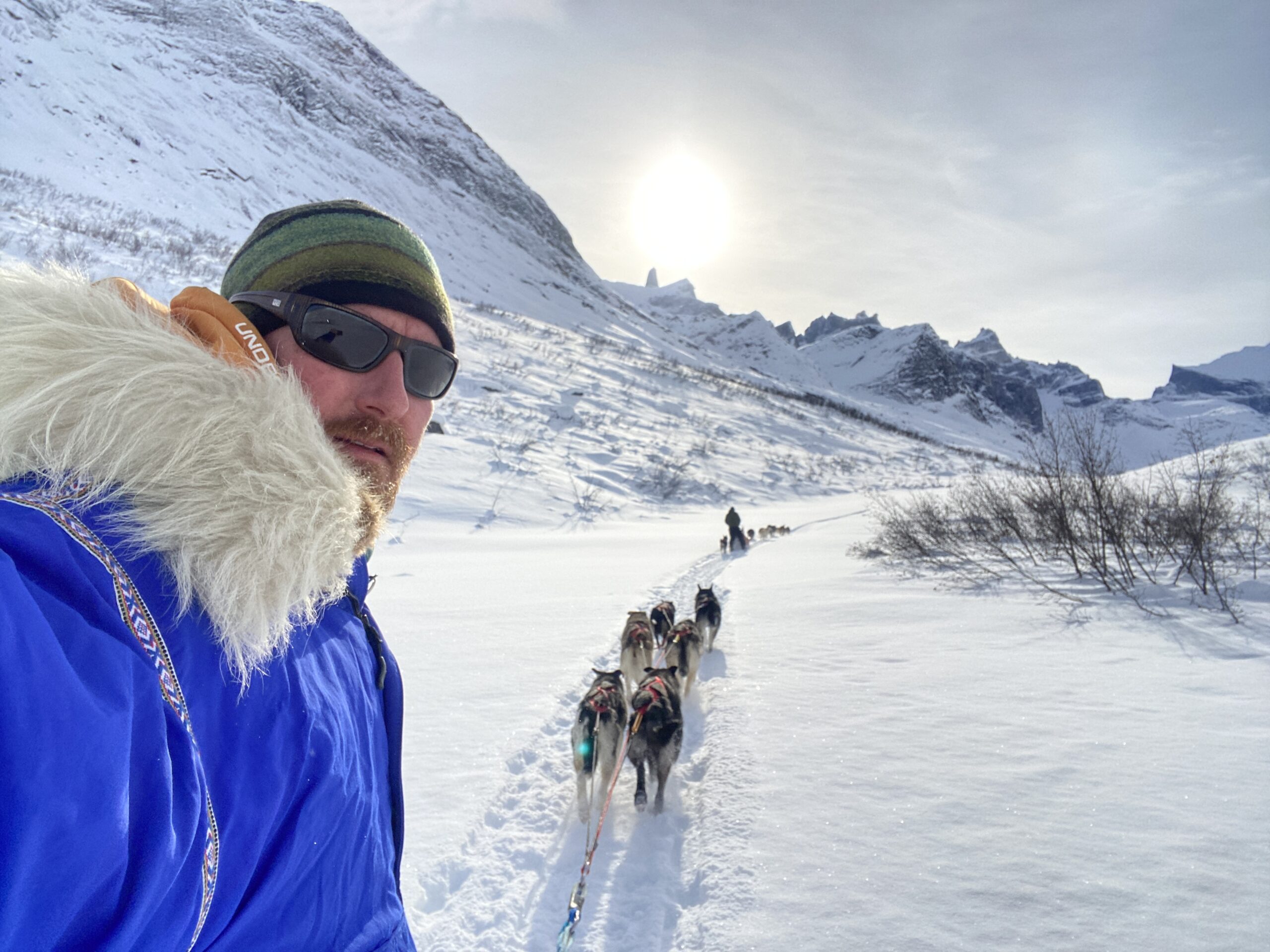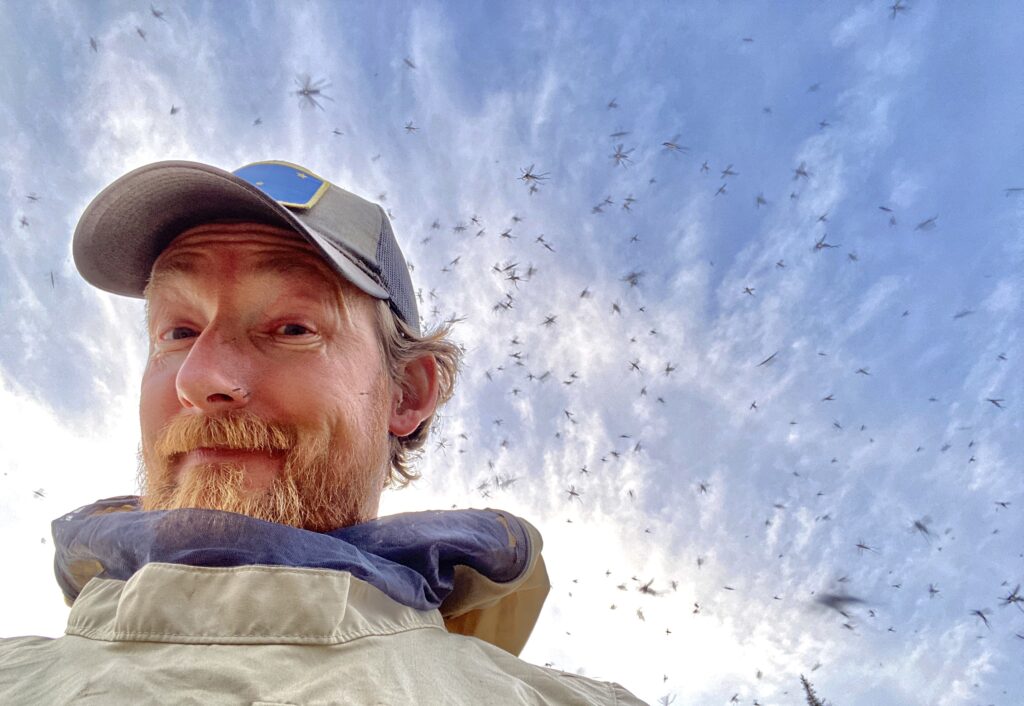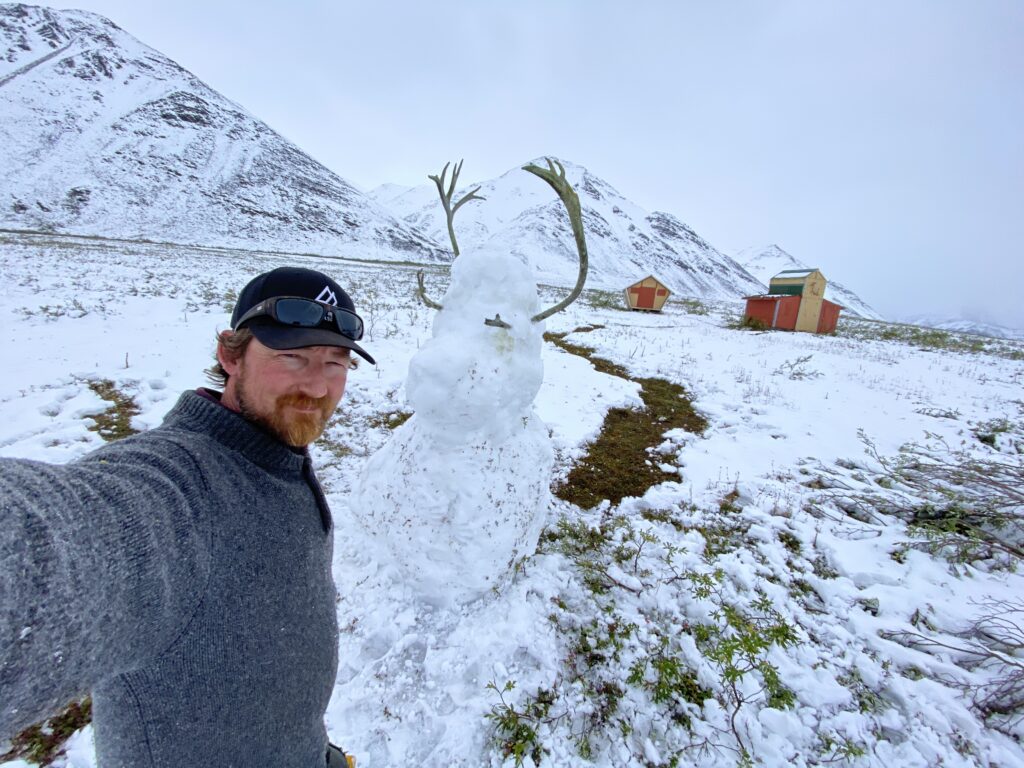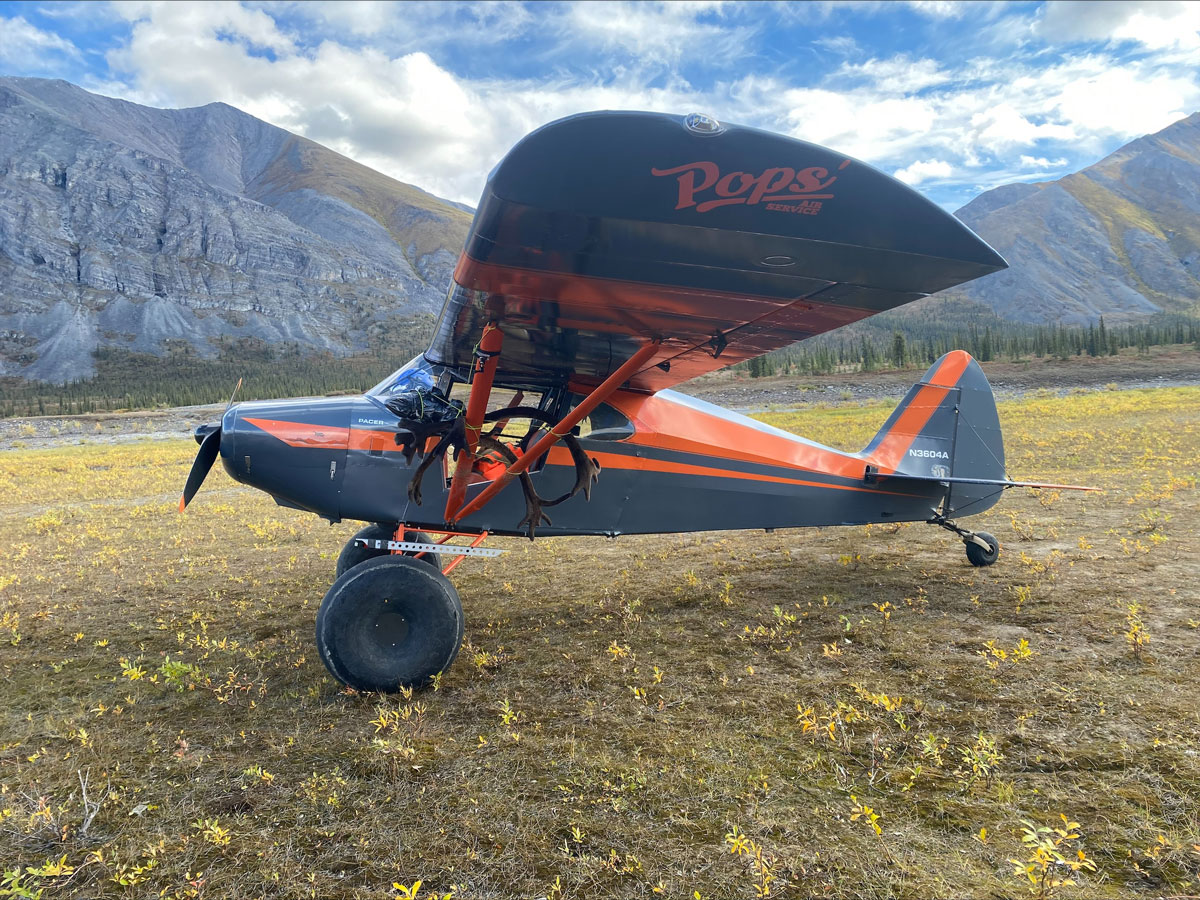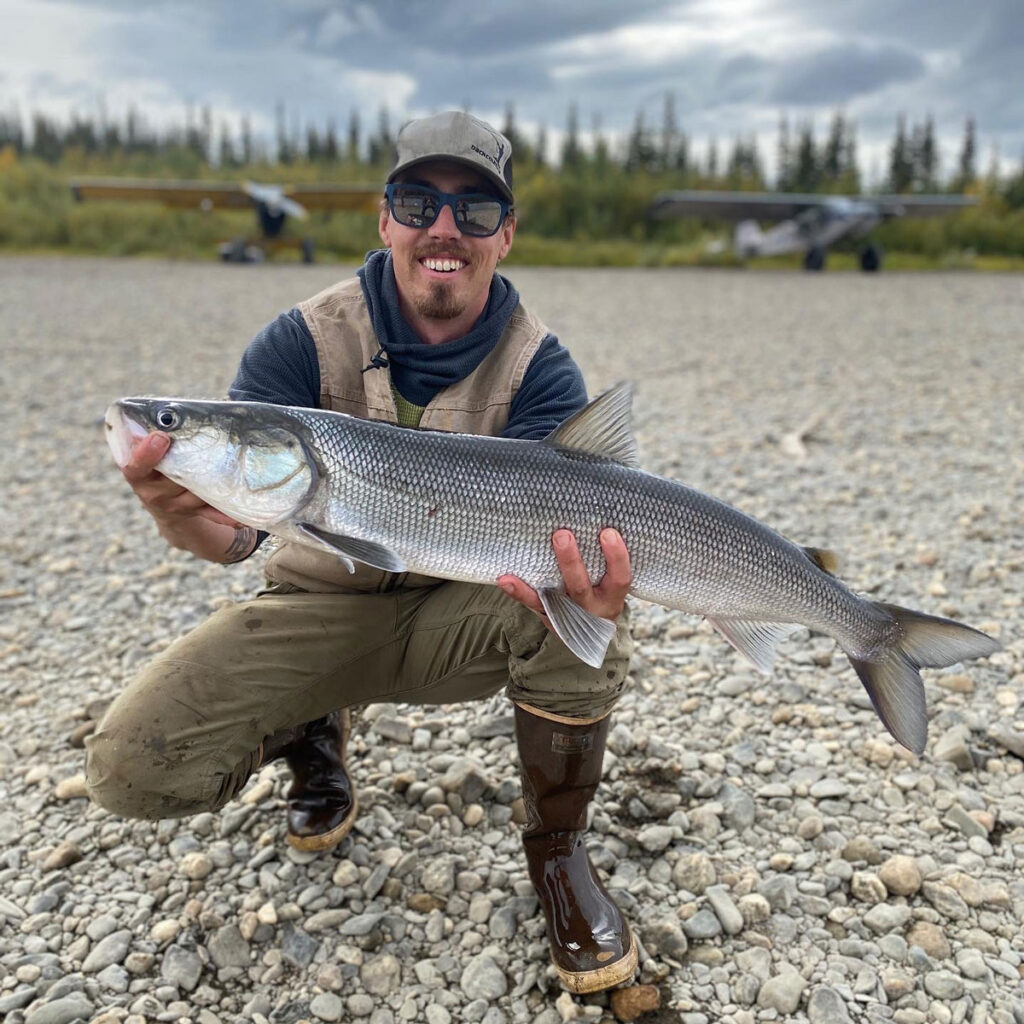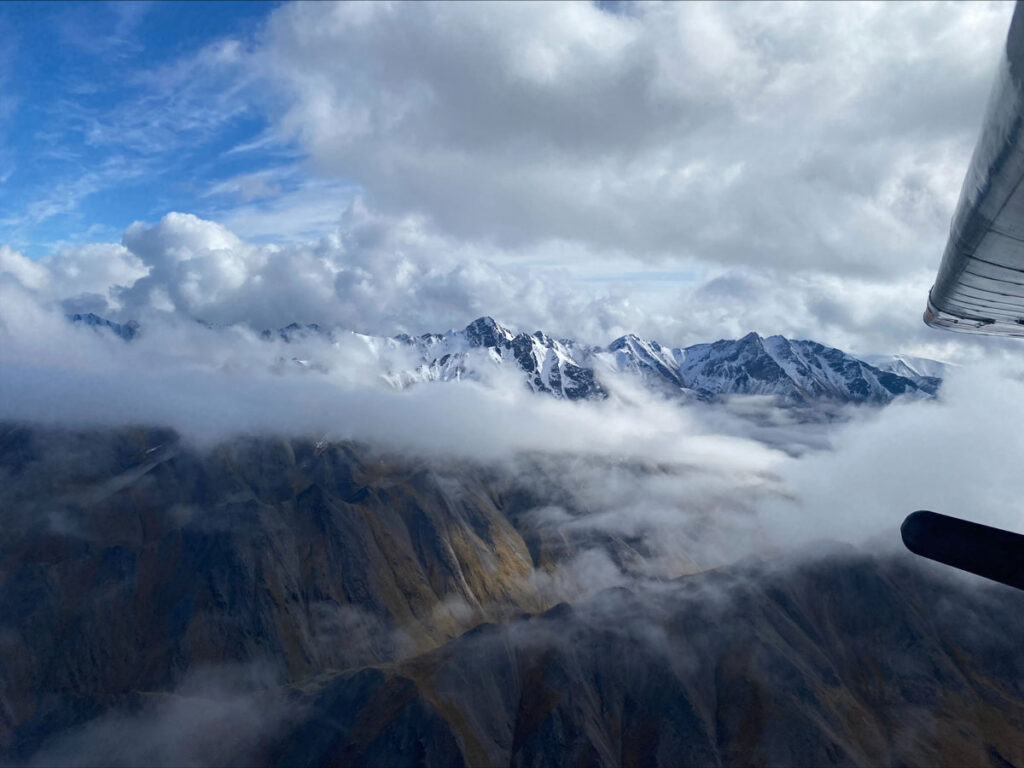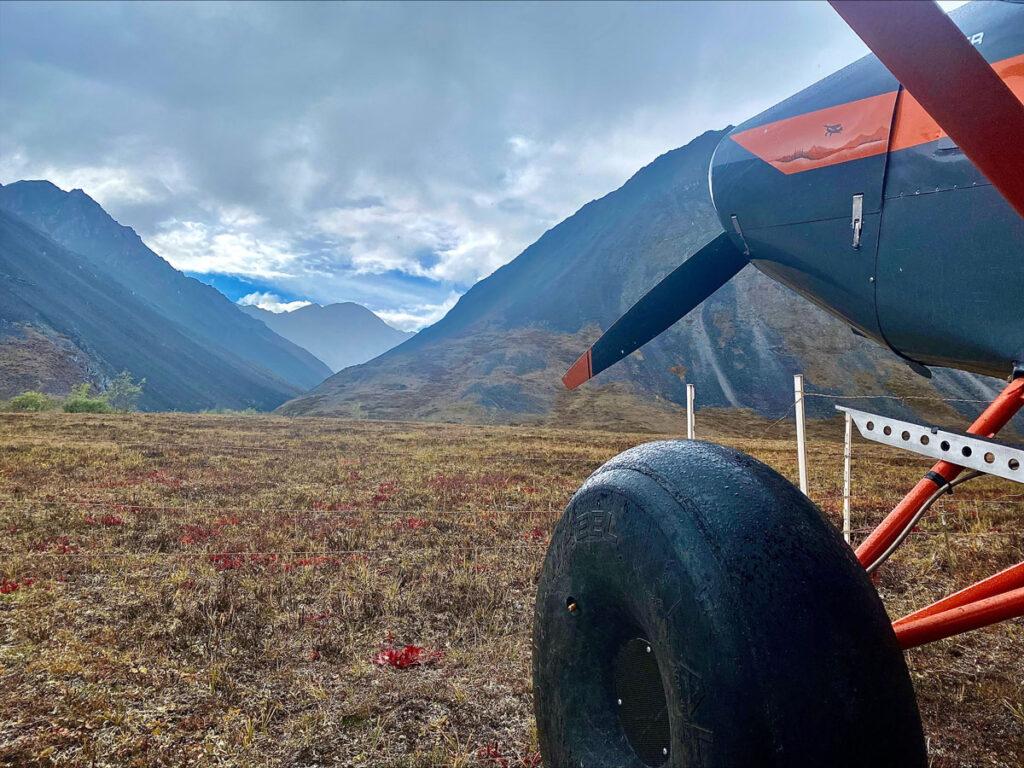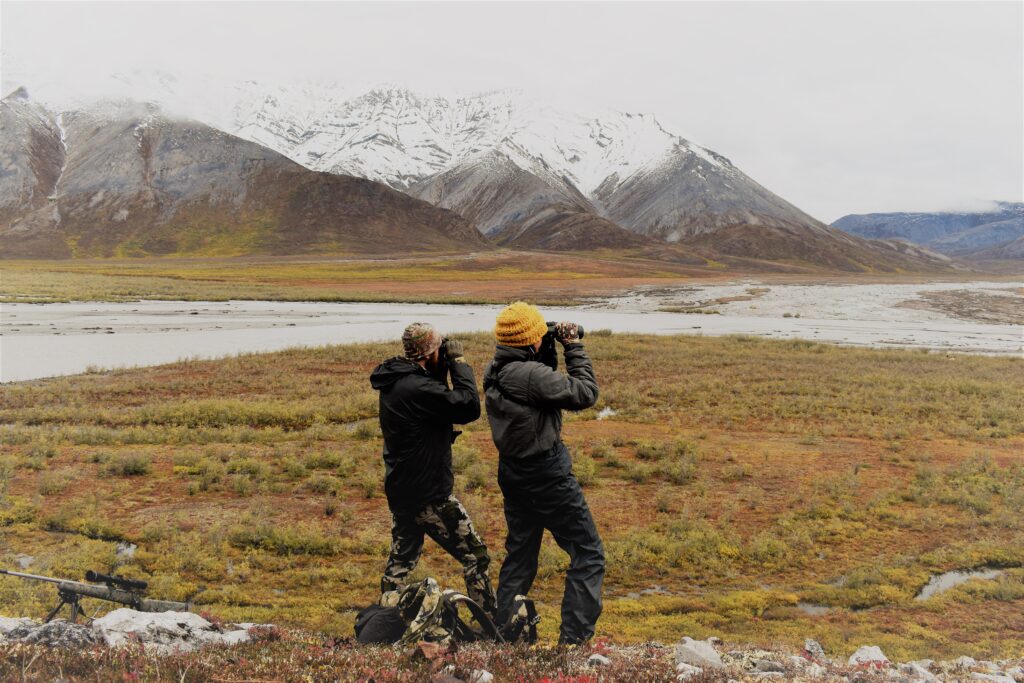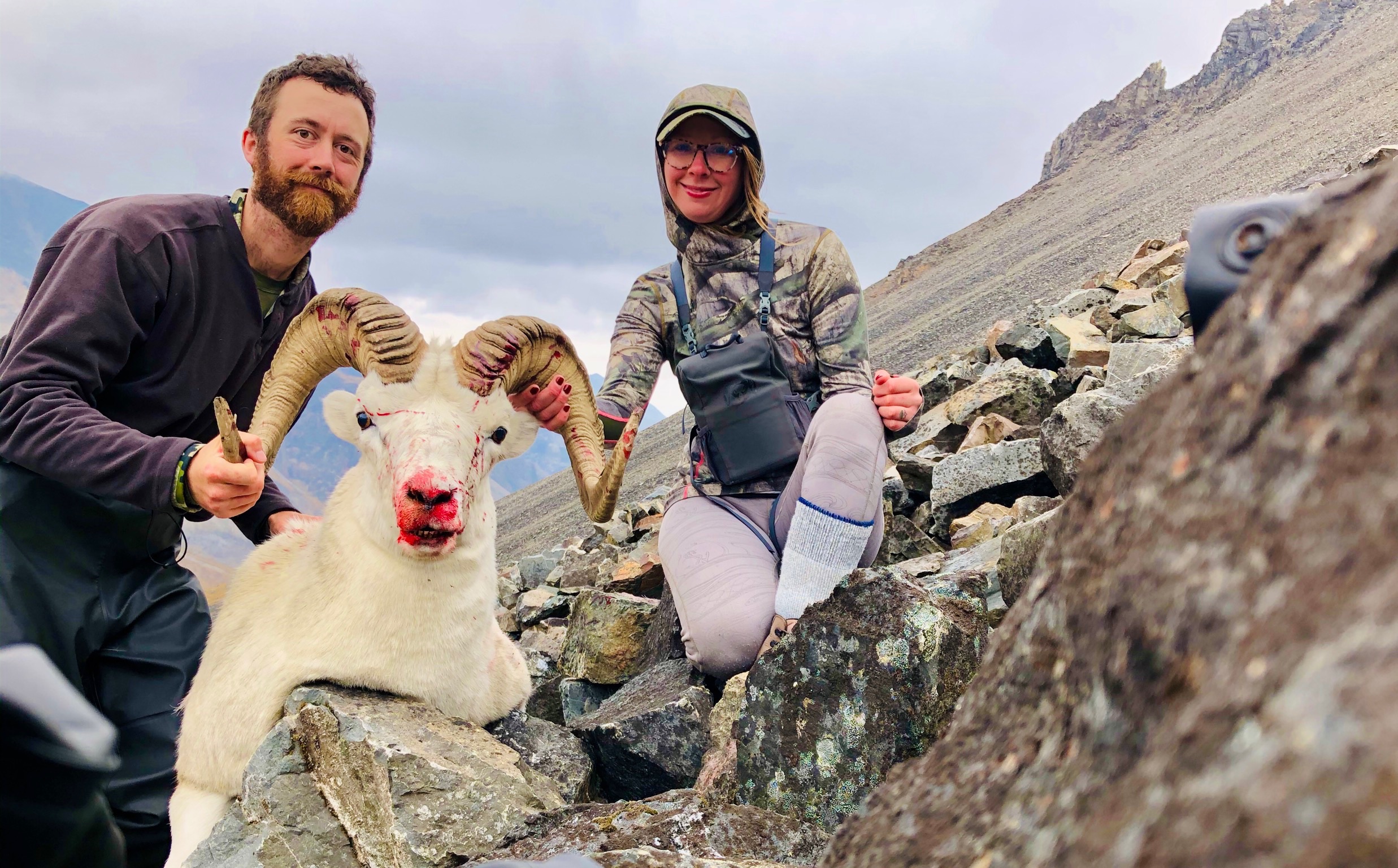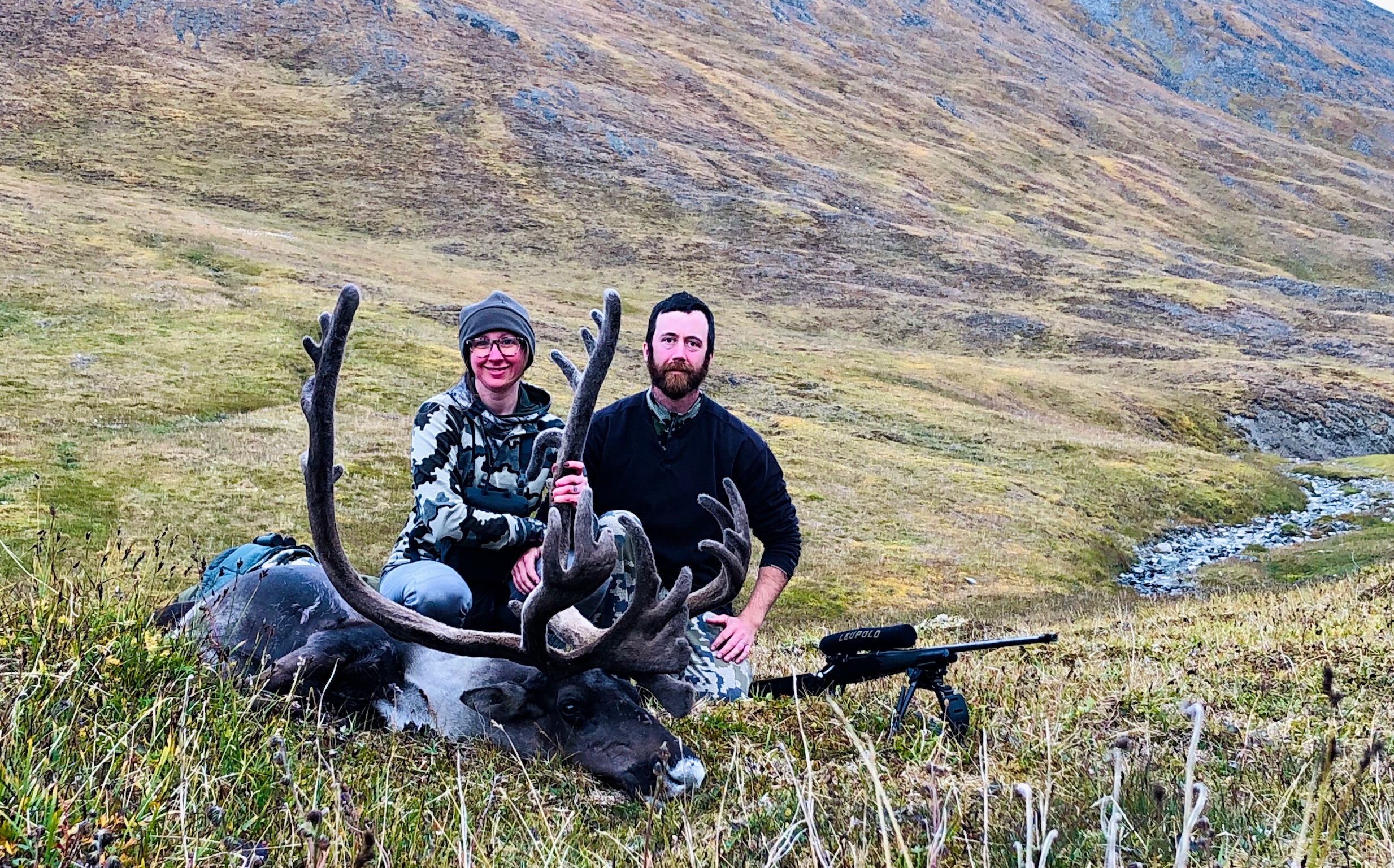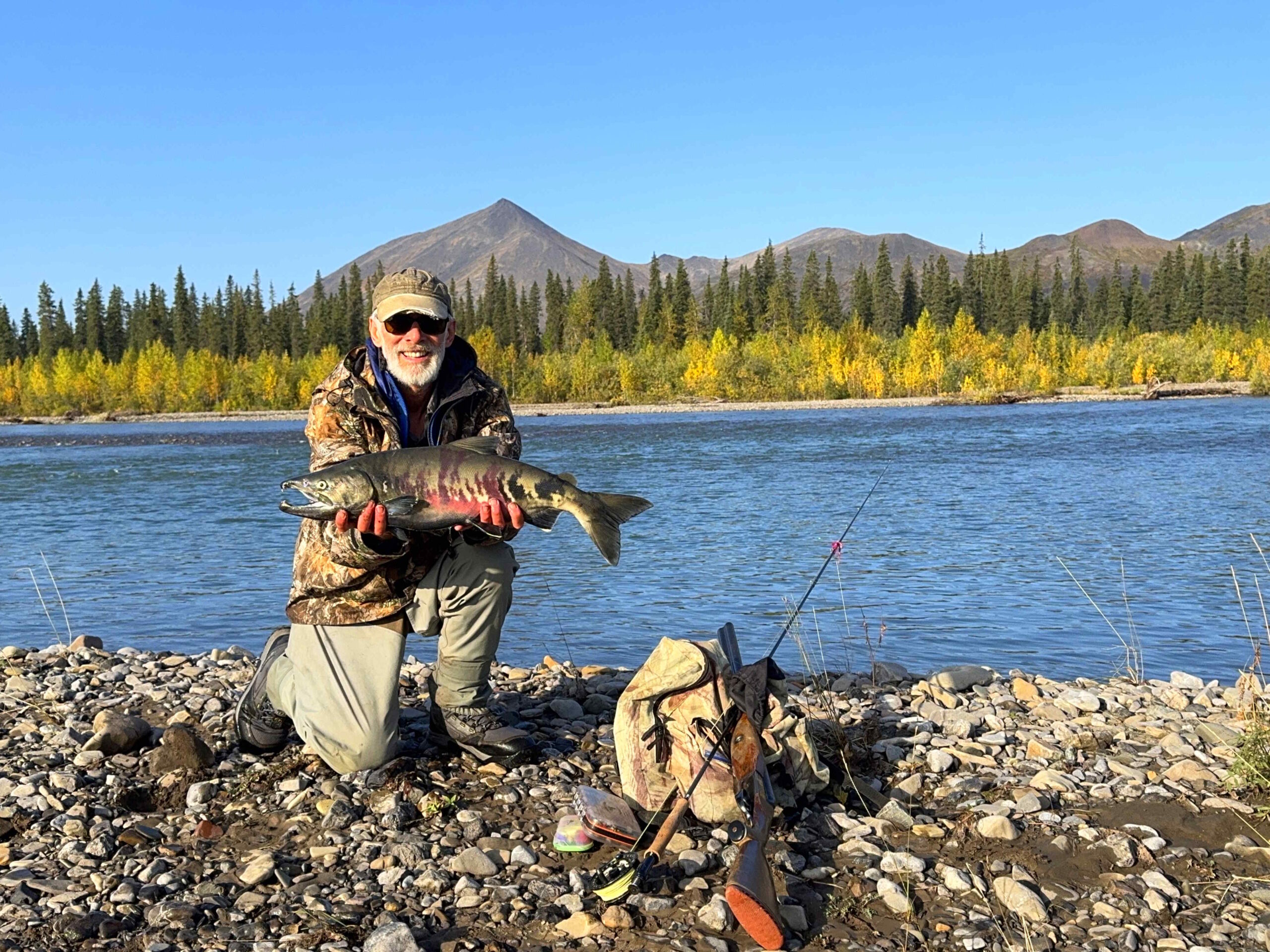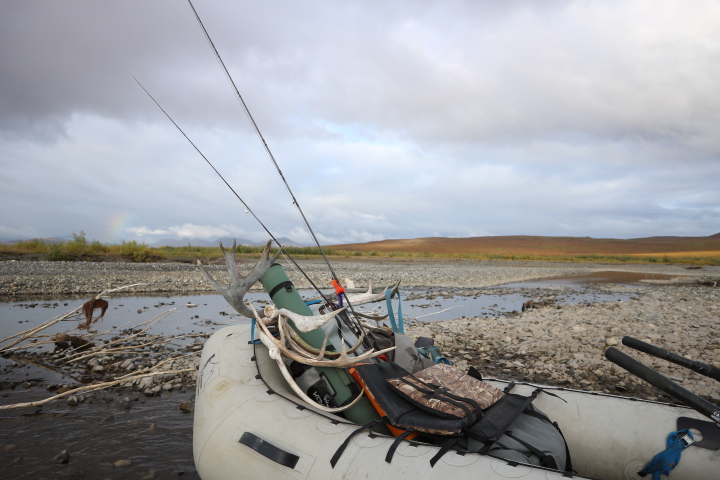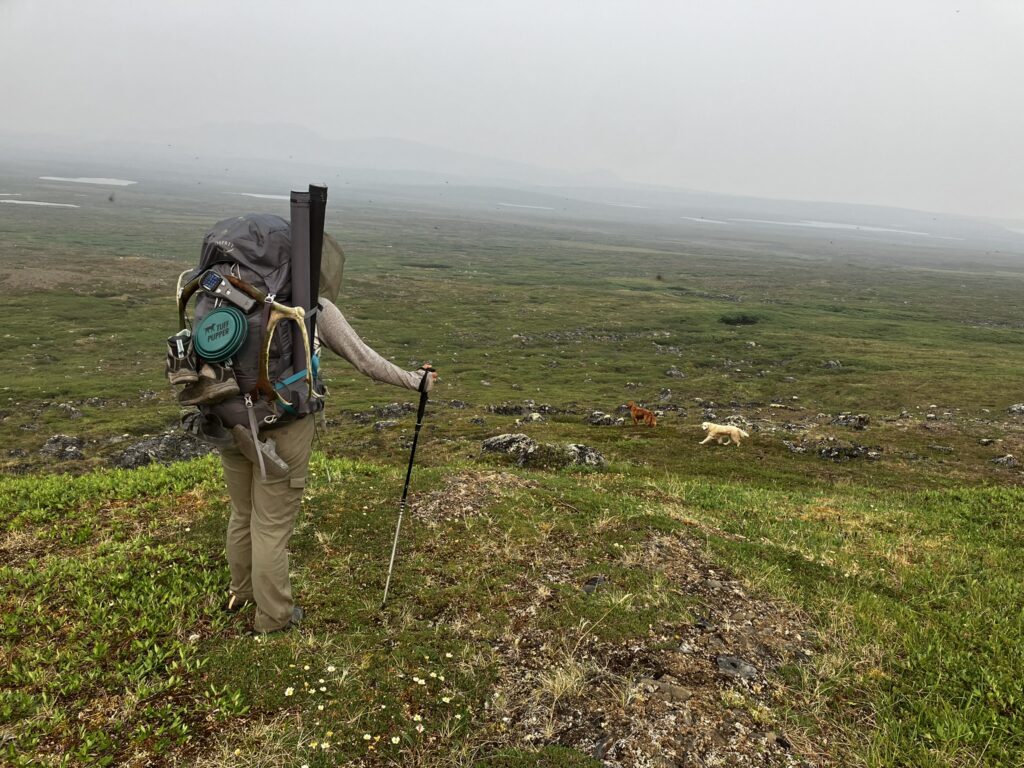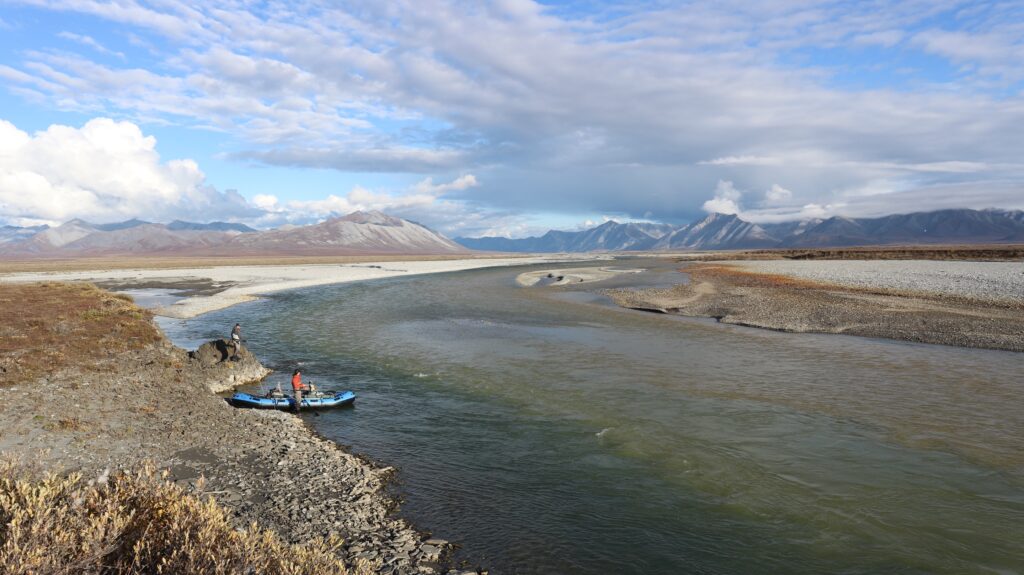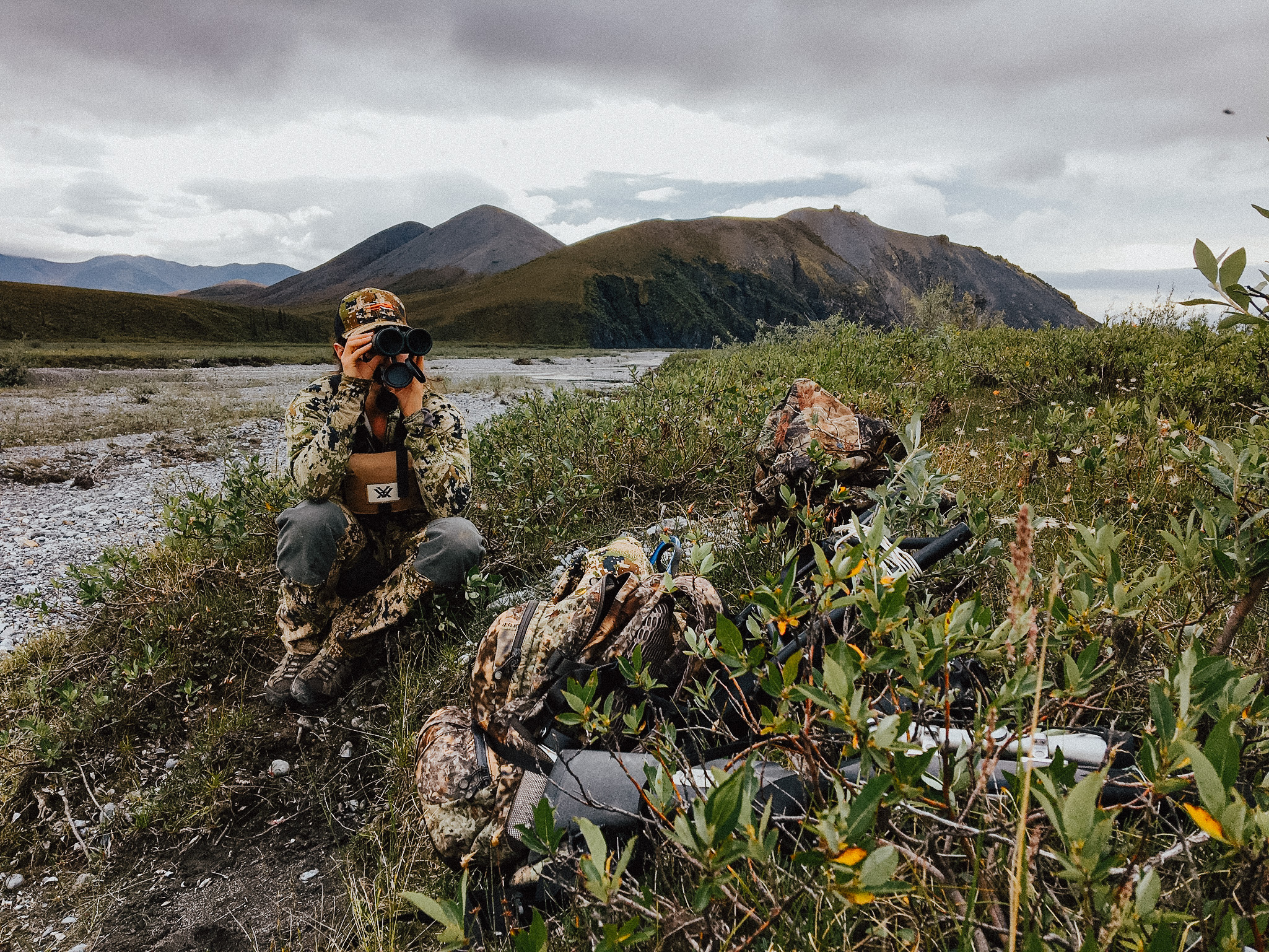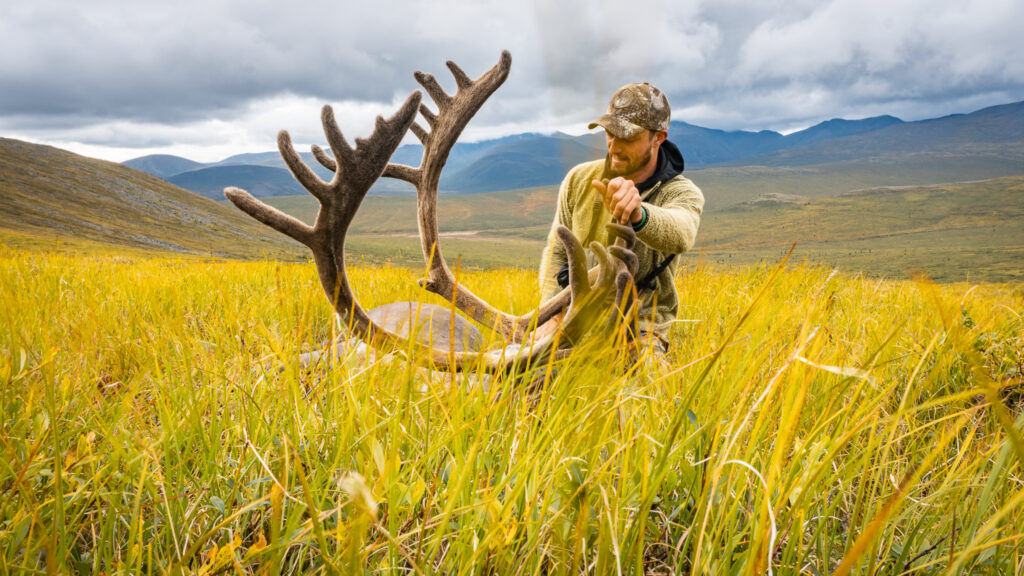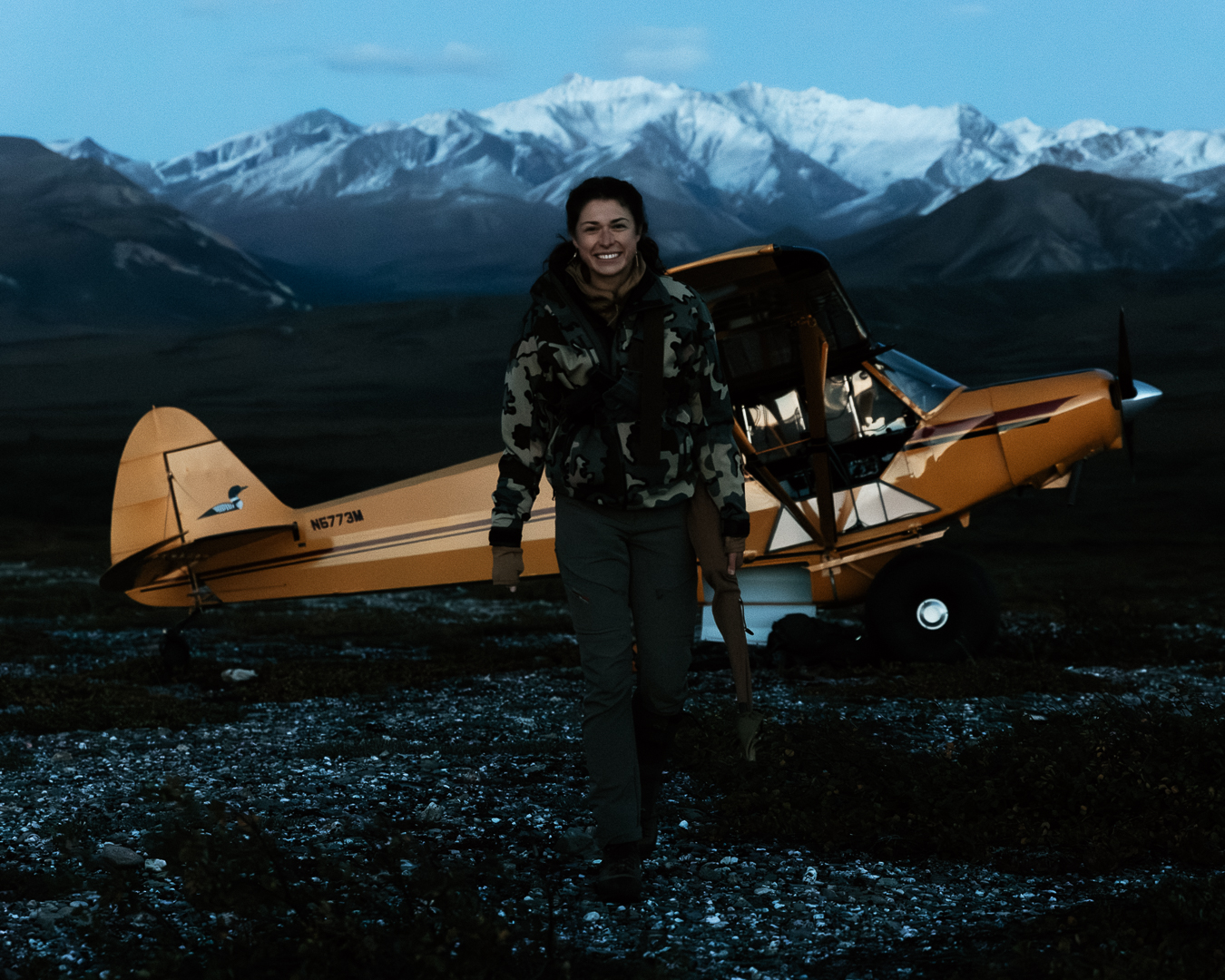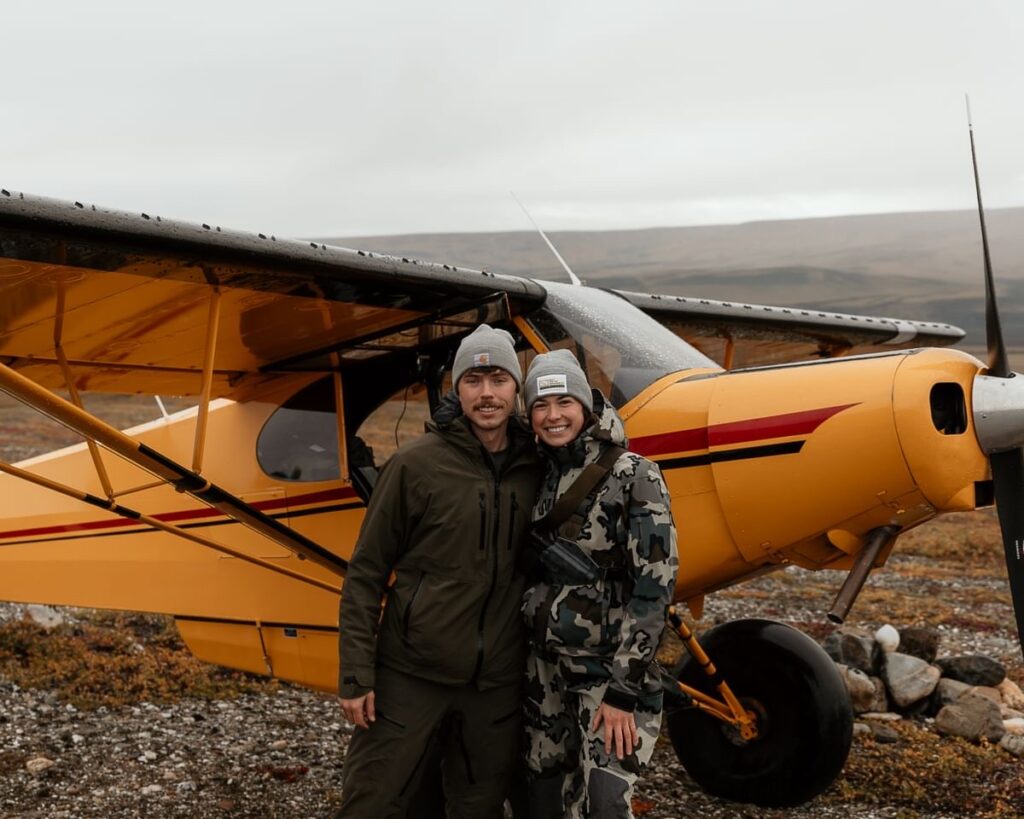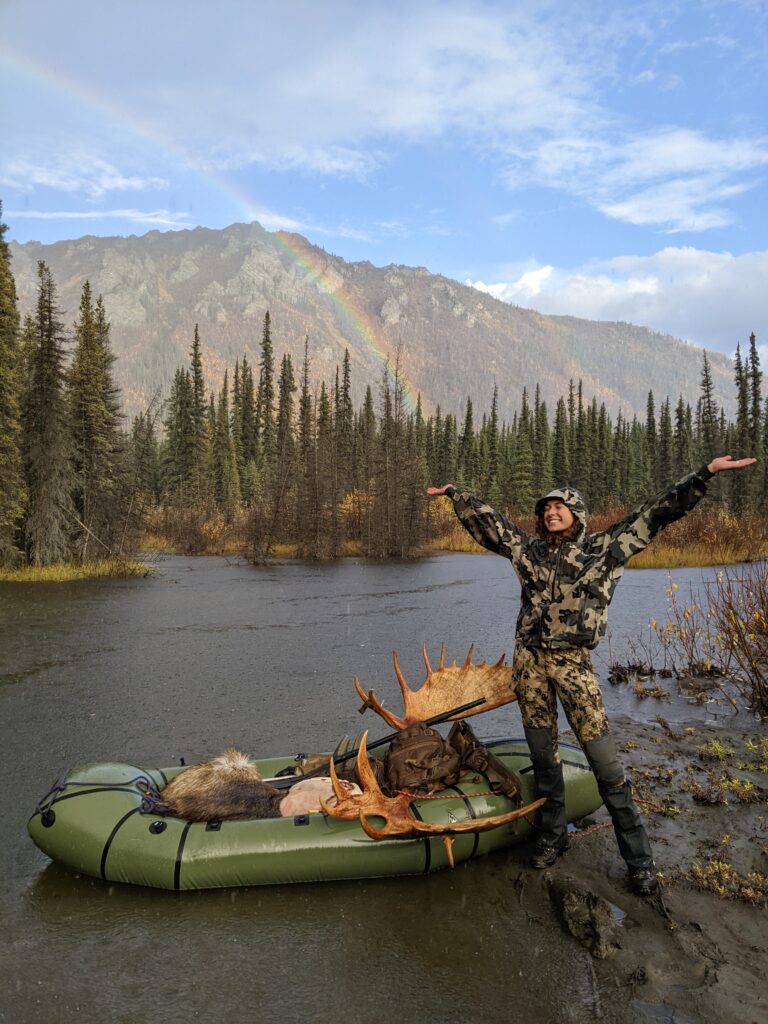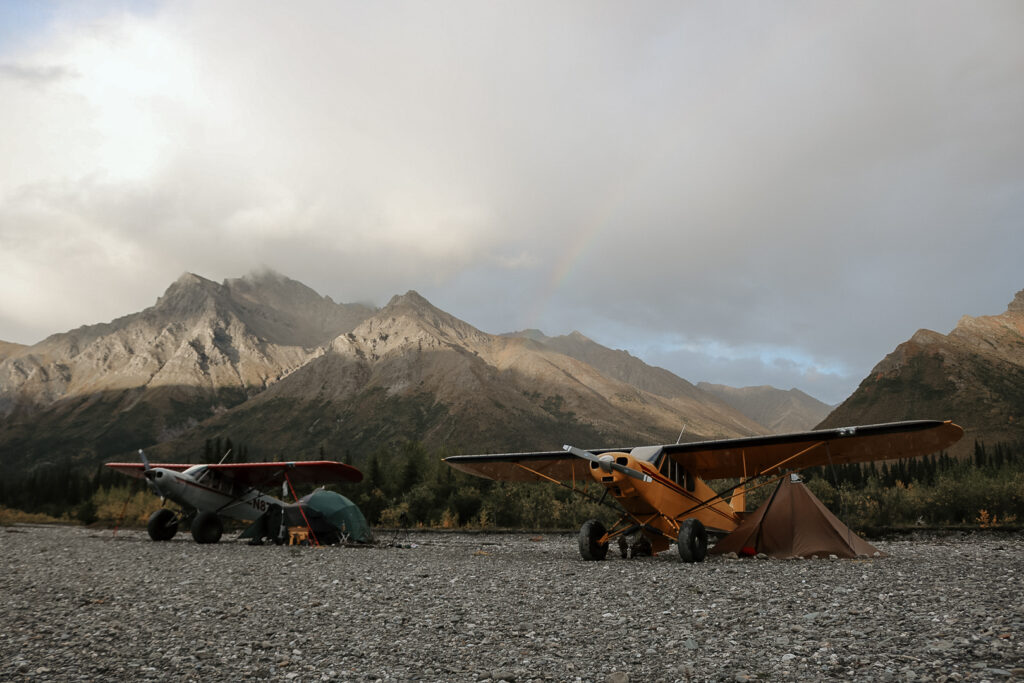
Robert Olsen-Drye is an aircraft mechanic and the owner of Pops’ Air Service in Homer, Alaska. He got his first gig as an aircraft mechanic in Bettles, a small community near the southern edge of the Brooks Range. He spent three summers there, exploring Alaska’s northernmost mountain range by plane, foot, and paddle. Since then, he’s searched high and low but has never found another place like the Brooks Range.
Olsen-Drye doesn’t normally get fired up about politics. But, when it comes to things like the proposed Ambler Road, he has to get involved. If built, Ambler would be a private 211-mile industrial corridor across the Brooks Range, aimed at supporting the development of an unknown number of foreign-owned, open-pit mines to the detriment of the region’s land, wildlife, and hunter and angler opportunities.
Here is his story.
Describe the types of activities you’ve enjoyed in the Brooks Range.
I have flown all over the Brooks Range from as far east as the Sheenjek River to as far west as the Kobuk Sand Dunes. I have landed my airplane on the gravel bars of most rivers flowing from the Brooks Range. I’ve hunted. I’ve floated rivers. I try to get up there every year for an adventure.
Share a memory that stands out to you.
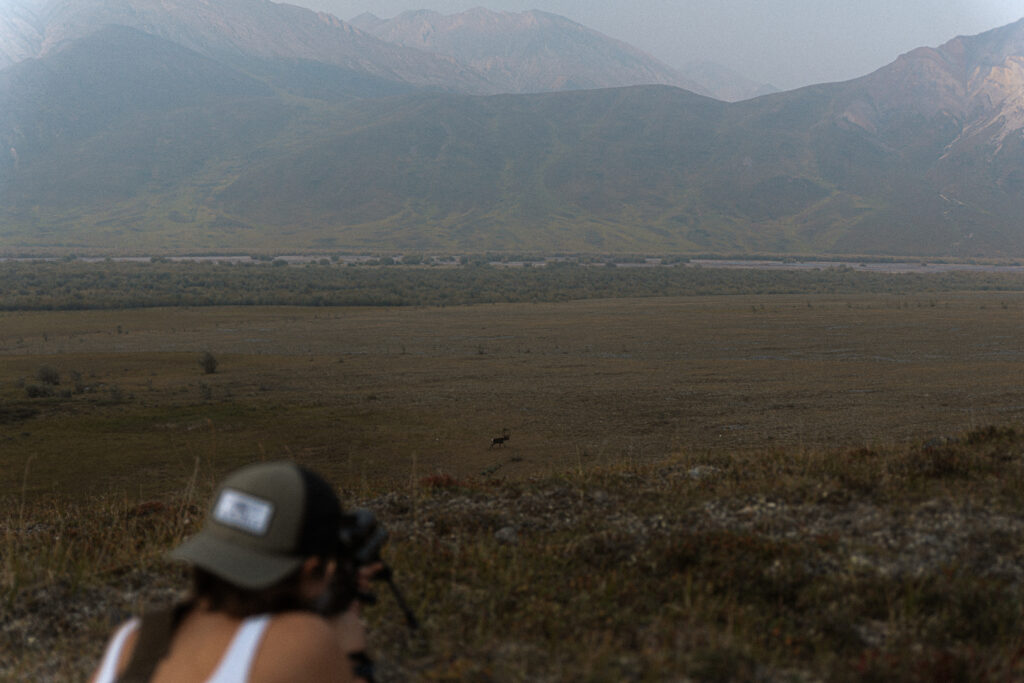
I was dropped by a floatplane on a lake on the western edge of the Brooks Range for a solo caribou hunt. During the more than a week I was out, I encountered fox, muskox, wolf, brown bear, and caribou. It was really enjoyable to experience nature, wildlife, and solitude. There’s something about being in that sort of solitude that really makes for lasting memories.
If you could come back, what would you love to do there next?
I would love to reattempt a sheep hunt. Or maybe a month-long raft trip.
A road through that wilderness would change everything. I like to see and hunt animals doing their natural thing. A big road with heavy equipment passing, with culverts and bridges, power stations and porta potties will 100% change wildlife behavior. It will alter water drainage and change the vegetation. There is no coming back if the Ambler Road is pushed through.
Robert Olsen-Drye
Think of your first trip to the Brooks – what was different than you expected?
My first trip to the Brooks consisted of flying my airplane to a remote village of 12 people to work as an aircraft mechanic for the summer. I didn’t know a single person and had never been that far north in my life. The village took me in and, since then, have become my lifelong friends. The Brooks Range will always be my home away from home.
What is most special about this place?
The wilderness. The vastness. The way the mountains seem to look at you with a mysterious eye. It’s raw. It’s more than most can handle. More than some can comprehend. The Brooks Range is definitely more than words can describe.
Share at least one piece of essential gear you’d recommend packing or advice you’d share with someone going to the Brooks for the first time.
Get an inReach. There is zero reason to not have a communication device in case of emergency. The Brooks Range is a wild place, and you cannot expect your trip to go as you planned.
How do you think your experience in the Brooks would change if the Ambler Road was built? What do hunters and anglers stand to lose?
A road through that wilderness would change everything. I like to see and hunt animals doing their natural thing. A big road with heavy equipment passing, with culverts and bridges, power stations and porta potties will 100% change wildlife behavior. It will alter water drainage and change the vegetation. There is no coming back if the Ambler Road is pushed through.
What aspect of the proposed Ambler Road project concerns you most?
Once lost, we cannot “create” more wilderness. Every time we insert ourselves into nature we change it. If a person walks through the woods one time, we change it in the slightest bit like causing an animal to avoid the moss we stepped on. But to build this road through the Brooks—there will be massive machines blasting over it day and night. It will greatly affect the wilderness for the worse.
What might you say to someone who said, “I don’t understand why this road is such a big threat?”
A road through one of the wildest places in the world is the worst idea possible. It would completely change the experience of venturing to the Brooks Range for the remoteness.
Why is it important that hunters and anglers across the nation speak up against the proposed Ambler Road?
The corporations pushing the Ambler Road project have no shortage of money. It’s going to take all of us to keep them from bullying their way through this. It’s our duty as conservationists to speak up for our public lands and wild places.
Photo credit: Robert Olsen-Drye
Sign up for Hunters & Anglers for the Brooks Range updates here.
How the proposed Ambler Road could impact the Western Arctic Caribou Herd
One of the biggest concerns over the proposed Ambler Road is how it would likely impact the Western Arctic caribou herd. If built, the Alaska Industrial Department and Export Authority (AIDEA) has insisted that the Ambler Road would be a 211-mile private industrial-access only road through the southern flanks of the Brooks Range used to develop an unknown number of foreign owned mines.
Caribou are incredibly important to locals and visiting hunters, other species of wildlife, and the land. The Bureau of Land Management’s (BLM) Supplemental Environmental Impact Statement identifies 66 communities whose subsistence activities could be potentially impacted by this road, finding that each of the proposed three routes may significantly restrict subsistence uses in nearly half of these communities.
Some people question if the Ambler Road would really be that bad for caribou and people. They point to the James Dalton Highway, where it’s pretty common to see caribou peacefully grazing nearby. We asked Jim Dau, a retired caribou biologist for the Alaska Department of Fish and Game, to help explain the difference.
Dau has lived in Kotzebue, in northwest Alaska, since 1988. He was the Alaska Department of Fish and Game area biologist for 15 years and then the Western Arctic caribou herd biologist for 10+ years.
Dau began looking at the effects roads have on caribou during graduate school at the University of Fairbanks Alaska, with a study running from 1982-1985. He studied caribou from the Central Arctic caribou herd in the Kuparuk River Oil Fields north of the Brooks Range on the arctic coastal plain. He found that during calving season, maternal females avoided roads, buildings, and other industrial footprints. A month later, under extreme duress from mosquitoes, warble flies and bot flies, caribou would form large aggregations and negotiate roads – even standing in the shade of buildings – to seek relief from these insects in coastal insect relief habitat. Once cool temperatures or high winds reduced insect harassment, roads, traffic and other industrial infrastructure again interfered with caribou movements as they attempted to travel from insect relief habitat to better feeding areas inland.
A2024 study shows that road traffic on the North Slope disrupts caribou more than previously believed. Heather Johnson, a U.S. Geological Survey biologist who coauthored the study was quoted in theAlaska Public Media.
“Caribou are really sensitive,” Johnson said. “They’re really sensitive to human activity. And we’ve seen from past studies that they’re also sensitive to human infrastructure, and they really respond to it. The key takeaway from the paper is they’re more sensitive to road activity than we had previously recognized.”
Dau points out that Alaska has decades of experience showing that caribou can survive roads. But herds that have roads through their range tend to be significantly smaller than herds in roadless areas, such as the Western Arctic caribou herd. Most caribou herds near roads have been intensively managed, often allowing a hunter bag limit of only one caribou—usually a bull with a permit requirement— during a short open season each year.
“Roads can be terrible barriers to caribou, especially when there’s hunting off them or if there’s lots of traffic and other human activities on or along them,” Dau says.
The projected peak daily traffic for the proposed Ambler Road is 168 trips. However, this may be a conservative estimate.
The Western Arctic caribou herd’s range
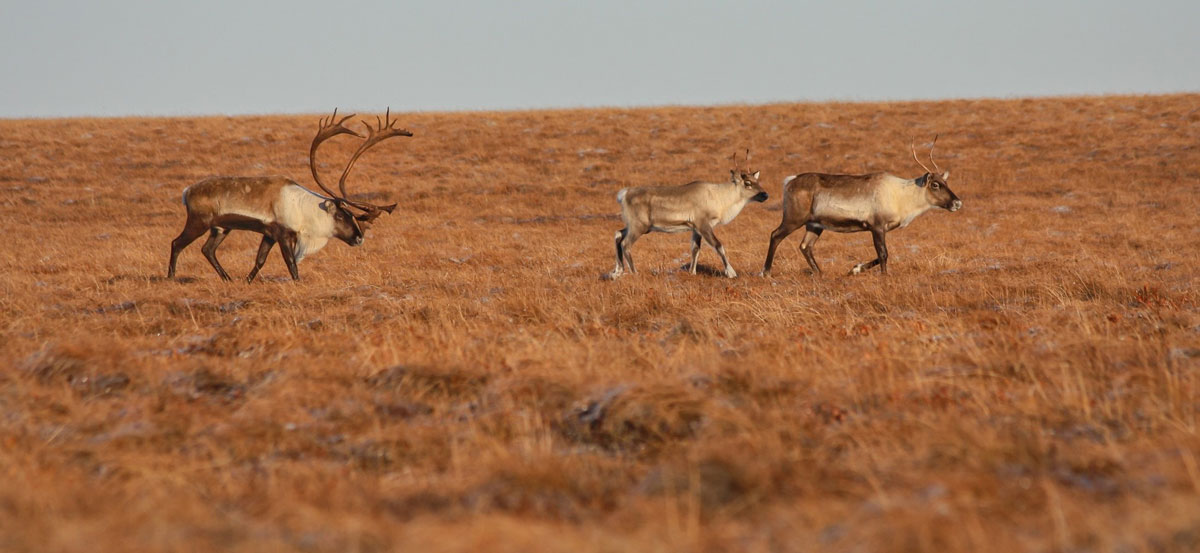
The Western Arctic caribou herd’s range encompasses around 140,000 square miles of northwest Alaska. Caribou from this herd have wintered as far south as the southern extent of the Nulato Hills west of the lower Yukon River. They calve in the early summer in the northern foothills of the Brooks Range. Dau points out that caribou from the Western Arctic herd have one of the longest migrations of any terrestrial mammal. Some people say caribou don’t know where they are going or travel by instinct, but Dau’s experience suggests otherwise.
“For caribou managers, one of the biggest challenges is giving caribou options for places to go. In any one year, caribou rarely use their entire range. But over the course of decades, they’re going to use—and need—every square inch of it.”
Jim Dau
“I don’t buy that at all,” Dau says. “These animals know movement areas where they’ve gone in the past; plus, they follow deeply embedded trails throughout their range. One of the remarkable things about this caribou herd is the long-term stability it has exhibited in its overall decadal movement pattern combined with shorter term annual and seasonal variability in movements and distribution. In some years, caribou begin moving toward specific portions of their winter range before the first snowflake ever falls.”
There are different variables in how caribou use their range. Caribou show their most fidelity to calving areas, and their least fidelity to winter range. Every 10 to 15 years, Dau has seen shifts in the Western Arctic herd’s winter range.
“Caribou need their entire range,” Dau says. “For caribou managers, one of the biggest challenges is giving caribou options for places to go. In any one year, caribou rarely use their entire range. But over the course of decades, they’re going to use—and need—every square inch of it.”
Differences Between the James Dalton Highway and the Proposed Ambler Road
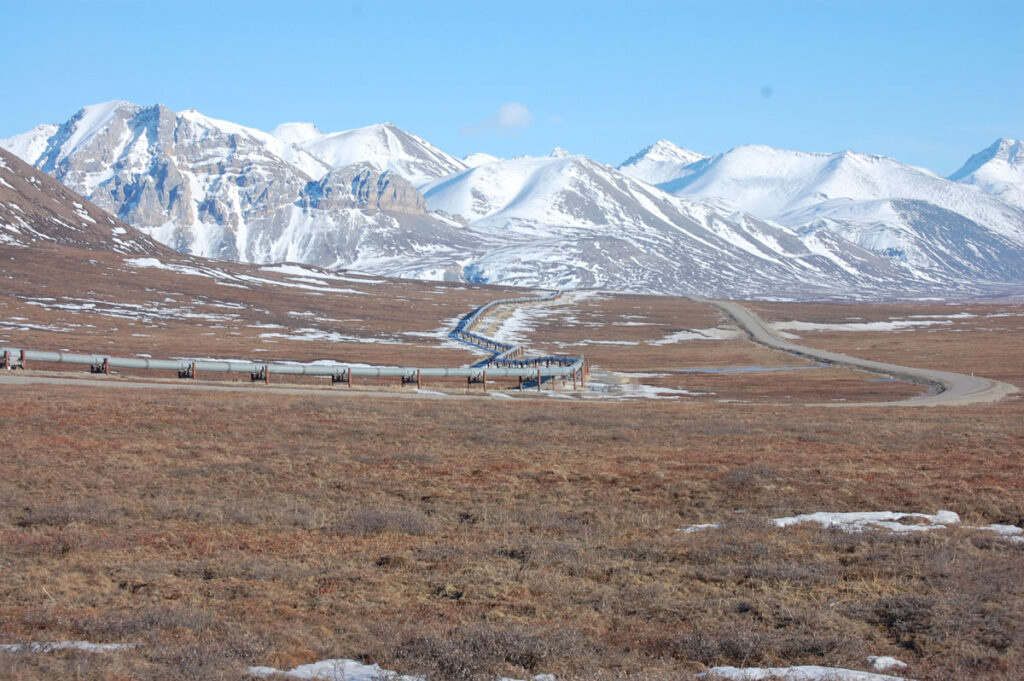
One prominent difference between the two roads is that the Dalton is a north-south corridor. The Central Arctic caribou herd’s summer-winter migration pattern runs north-south as well. The proposed Ambler Road would run 211-miles east-west, which would bisect much of the Western Arctic caribou herd’s winter range. If caribou from this herd successfully cross the proposed Ambler Road during the fall migration, they would have to cross it again to migrate north during the spring migration. This, Dau and many others believe, could have serious consequences not just for caribou but also for the people that depend on them.
BLM’s Supplemental Environmental Impact Statement states that the Ambler Road would affect migrating caribou in “an expansive area beyond the specific project area. Changes in availability of caribou to subsistence users could be a high-magnitude impact for impacted communities. Population-level effects to caribou are less likely but could be large-magnitude effects and impact all subsistence harvesters throughout the annual range of the herd.”
Dau believes we have a good model of how the Ambler Road would affect the Western Arctic herd and local and visiting hunters. It comes from looking at how caribou have responded to the Red Dog Mine road in northwest Alaska.
Red Dog Mine Road Study
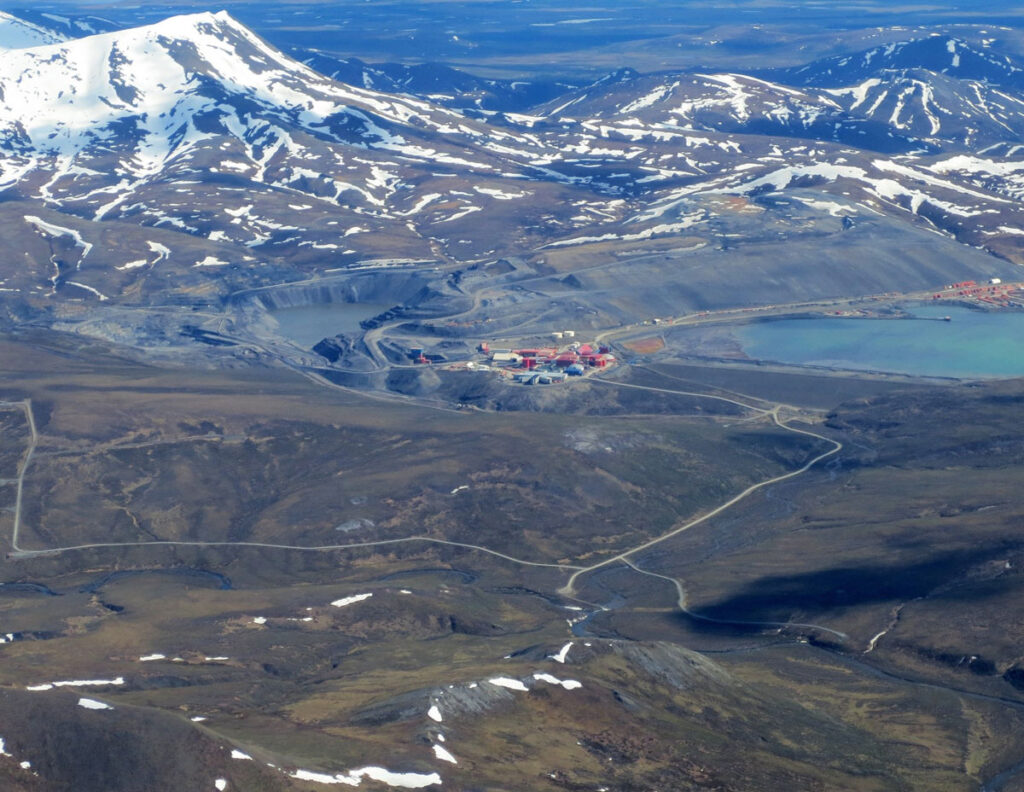
The Red Dog Mine has the world’s largest known zinc deposit and is located 80 miles north of Kotzebue, near the western extent of the Brooks Range. The mine’s road is used to haul ore 52 miles across the Western Arctic caribou herd’s range to a port 10 miles southeast of the village of Kivalina. The Red Dog Mine road is much smaller than the Ambler Road would be and is currently the only industrial mining road in Northwest Alaska of a remotely similar scale.
Dau looked at how the Red Dog Mine road affected caribou movements from the middle of August through November during 1990-2015. In many years, a significant portion of the Western Arctic caribou herd encountered the road during their fall migration to their wintering grounds. Before Dau plotted the data of satellite collared caribou, he thought they weren’t having much difficulty crossing the road based on aerial reconnaissance flights of the road during fall. The data showed otherwise.
“I was shocked. I couldn’t believe it,” Dau says. “The telemetry data clearly showed that caribou approached the road but were usually delayed before crossing it. It often took multiple attempts for delayed caribou to finally cross it. During the fall 2011 migration, on average it took caribou 33 days before they crossed; however, some caribou were delayed up to two months before they crossed the road. Some caribou backtracked up to a hundred straight-line miles while delayed by the road. Of course, caribou rarely travel via straight lines. Many caribou that were delayed by the road traveled several hundred miles during their attempts to cross it. Some caribou never crossed the road. Instead, they wintered north-northeast of it, or they went around it to the east.”
Dau estimated that during the fall 2011 migration, roughly 80,000 caribou were delayed by the road. He found the Red Dog Road affected caribou up to 30 miles away—animals were probably responding to other caribou who’d already bounced off the road. After the caribou finally crossed the road, they put on extra speed to make up for lost time and get to their wintering grounds.
Dau notes that the Red Dog road has negatively impacted hunters. Many villages used to count on at least two months to obtain caribou meat during fall. During years when caribou were delayed by the road, some communities downstream of Red Dog in the fall migration had substantially less than that, and caribou weren’t available until after the onset of rut caused subsistence hunters to shift from taking bulls to harvesting cows. The decline in caribou and hunting opportunities has led to controversial non-local caribou hunting closures on federal land.
The Western Arctic Caribou peaked at 490,000 caribou around 2003. Since then, it has steadily declined and, in 2023, the Alaska Department of Fish and Game reported it numbered 152,000 caribou. Like all wildlife populations, caribou numbers naturally fluctuate up and down. No one fully understands what is driving this current decline, but Dau thinks that warming temperatures are likely a major contributing factor.
“Winter icing events in northwest Alaska have become more frequent and severe since around 2000, and my observations during caribou surveys and while retrieving radio collars from hundreds of caribou carcasses suggested that these events were deadly,” Dau says. “There is never a good time to fragment caribou ranges, but this is a particularly bad time to do so given that climatologists predict that temperatures are going to continue to rise for decades to come, and considering the persistence and degree of this ongoing caribou decline.”
A Valid Concern
Since it went into production, the 52-mile-long Red Dog Road has supported about 80 trips/day by large ore trucks, with additional small-vehicle traffic and road maintenance equipment. Red Dog is the sole industrial mine that uses this road. In contrast, AIDEA has reported that the 211-mile-long Ambler Road will support multiple mines in the Ambler Mining District, and said that communities near the project will be able to connect to this road for commercial deliveries of goods and services. However, AIDEA has provided very little information regarding the maximum number of mines, their size, or the type that the Ambler Road will facilitate. BLM’s Supplemental EIS report for the Ambler Road assumed that this road would support four mines – one for each major mineral deposit – in the Ambler Mining District. This assumption is by no means a binding limitation on the maximum number of mines or level of mining activity in the Ambler Mining District, though. Thus, throughout the original EIS and subsequent Supplemental EIS processes, agencies and the public could only consider potential impacts of the proposed road on the land, wildlife, and people: impacts of a large and possibly ever-expanding industrial mining complex have been ignored.
The only infrastructure along the Red Dog Road is a modest port site located at the coast. The proposed Ambler Road will have multiple buildings, several airports, numerous gravel sites, many large bridges, and other infrastructure located along its length. Given these differences, the Ambler Road will have significantly higher levels of vehicular traffic and other human activity than the Red Dog Road. This will greatly increase the Ambler Road’s potential to delay and deflect caribou movements and magnify its impacts on other fish and wildlife in the project area.
You don’t have to be a biologist to predict that, if built, the Ambler Road would negatively affect the Western Arctic caribou herd. Dau thinks the Ambler Road will have effects similar to the Red Dog Mine road–except at a much larger scale. The project would change the biological and social character of northwest Alaska to the detriment of subsistence users and visiting hunters and anglers.
Caribou, Dau points out, are incredibly important to northwest Alaska. For visitors, a Western Arctic caribou hunt can be a trip of a lifetime. To local people, caribou provide their most important sources of terrestrial meat.
“But it goes beyond that,” Dau says. “Caribou are part and parcel of indigenous subsistence cultures. I cannot overemphasize the importance of caribou to people.”
Photo credit: Jim Dau and Bjorn Dihle
Sign up for Hunters & Anglers for the Brooks Range updates here.
We have important news to share about the future of Alaska’s Brooks Range.
During conference negotiations on December 8, 2024, an amendment that would have forced the Department of the Interior to permit the 211-mile Ambler Industrial Road through America’s most wild and remote hunting and fishing grounds was quietly removed from the final draft of the National Defense Authorization Act.
This was a critical step in maintaining the wild and remote character of the Brooks Range, and it would not have been possible without hunters and anglers like you and our many committed partners. Thank you for your ongoing dedication to Alaska’s public lands and our hunting and fishing opportunities.
Proponents of the Ambler Road aren’t backing down, but today we celebrate the removal of one more threat and the knowledge that there are champions of the Brooks Range in Congress who acted for fish and wildlife habitat, water resources, and our nation’s wildest remaining country.
Thank you for being with us.
Follow Hunters & Anglers for the Brooks Range on Facebook and Instagram for future updates.
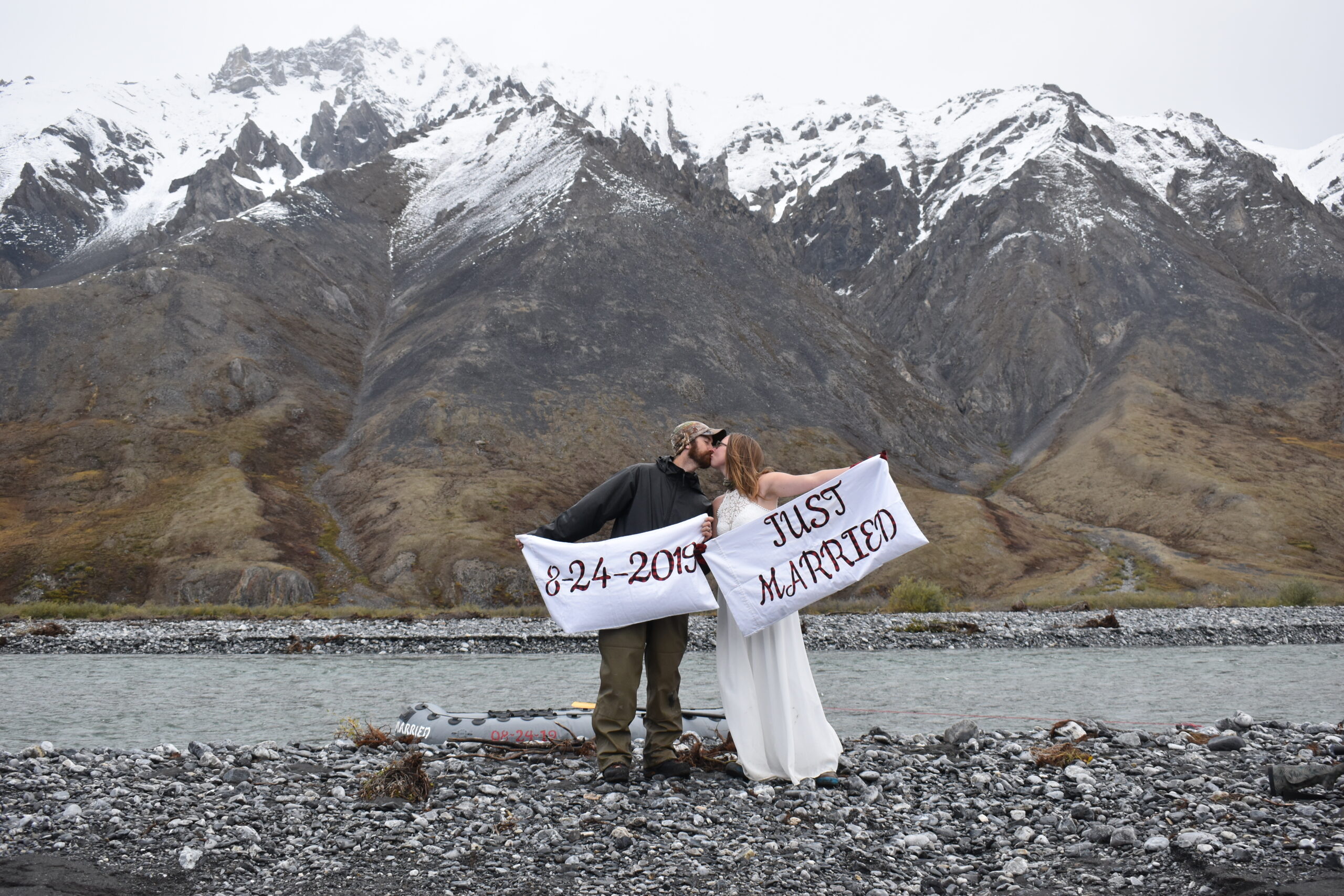
Mary Glaves moved to Alaska in 2016 to pursue her dream of hunting and exploring the wildest lands left in the country. She and her husband chose to get married in the Brooks Range on a caribou hunt. That trip, and many since, have solidified Glaves’s understanding of how special a place the Brooks Range is and why it’s important to maintain its wild character.
Glaves believes that hunters and anglers have everything to lose and nothing to gain if the proposed Ambler Road is permitted. If built, the 211-mile private road would cut across the southern flanks of the Brooks Range to support the development of an unknown number of foreign-owned mines. She points out that the project would not create more access but, on the contrary, rob hunters and anglers of outdoor opportunities.
Here is her story.
Photo: Mary Glaves
Describe the types of activities you’ve enjoyed in the Brooks Range.
My first trip to the Brooks Range was to marry my best friend on a float hunt for caribou. Since then, I’ve hunted Dall sheep, caribou, and moose there. No trip has been quite like that first one, but all have been memorable and rewarding.
Please share a favorite hunting or fishing memory or story from your time in the Brooks Range.
My favorite memory from the Brooks was from a Dall sheep hunt to celebrate our first wedding anniversary. We had incredible weather for most of that hunt. Despite having favorable conditions, we were getting toward the end without having taken a sheep. I was mentally preparing myself for not having success and trying to let go of circumstances I couldn’t control. On the last day, we finally spotted a legal ram. I’d never hiked so fast in my life! After a long day of field dressing, caping, and hiking the ram back to camp, we retrieved a bottle of champagne we had stashed at the air strip. I’ll never forget that feeling of exhausting hard work and celebration on top of a mountain with no one else around for miles.
Photo: Mary Glaves
If you could come back, what would you love to do there next?
During our wedding float hunt, we planned to fish for Arctic char and grayling but never got an opportunity due to extreme weather conditions and high water. It’s on my list to do a Brooks Range float trip dedicated to fishing. We’re considering the Kobuk, so we also have a chance to catch sheefish.
Think of your first trip to the Brooks – what was different than you expected?
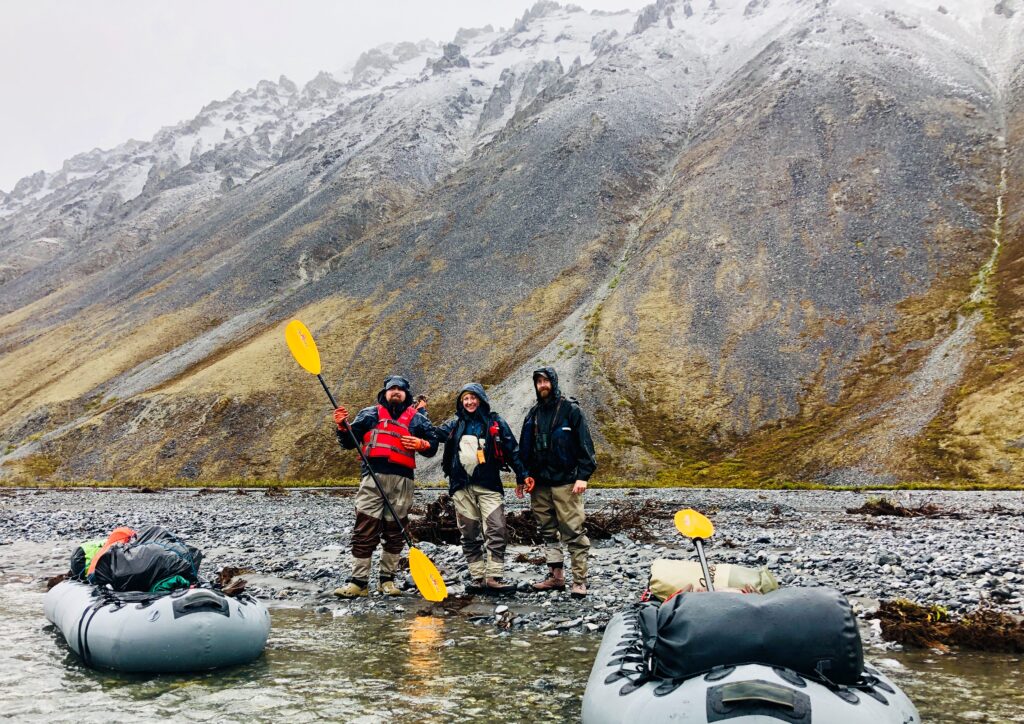
Everything. The beauty and expansiveness were more vast and the challenges wilder. Some of the most arduous challenges I’ve faced in the backcountry occurred during our wedding float hunt. It was incredibly rainy and windy. The river we floated was the highest it’d been in over a decade. We had to bail out our rafts every mile or so with plastic stemless wine glasses.
One day we were only able to float four miles before we were hit with 40 to 50 mph wind gusts. We watched the river rise three feet that evening and had to move camp twice. My husband and I like to say that if we could survive that trip, we can survive our marriage. Our first trip to the Brooks ended on a high note with sunny weather and us harvesting two caribou.
Unpredictability and wild adventure are part of the allure of the Brooks Range. If you are prepared for the unexpected, you’ll enjoy even the most challenging conditions, form deep bonds with your adventure partners, and grow as an individual.
Photo: Mary Glaves
What is most special about this place?
The Brooks Range is the largest tract of wildlands left in the country — and arguably the planet. It allows for natural resources to self-sustain with an abundance of fish and wildlife, which face enough challenges without the Ambler Road.
Share at least one piece of essential gear you’d recommend packing or advice you’d share with someone going to the Brooks for the first time.
Good rain gear and flexibility. You never know what you’ll encounter in the Brooks. But you can almost guarantee that you will encounter rain and that your plans will change at least once, if not many more times.
Photo: Mary Glaves
How do you think your experience in the Brooks would change if the Ambler Road was built? What do hunters and anglers stand to lose?
The building of the Ambler Road would not create more access and opportunity but, on the contrary, rob us of it. The east-west trajectory of the road is unlike the Dalton Highway in that it bisects hundreds of rivers and streams and caribou migration routes. It’ll require 2900+ culverts, which will need to be maintained in extreme and rapidly changing climate conditions. It would jeopardize food security for remote villages and limit opportunities for visiting hunters and anglers.
What’s the biggest misconception you’ve heard about the project?
Many people think the road will lead to better hunting and fishing access. If built, the Ambler Road will likely remain private, unlike the Dalton Highway. The proposed Ambler Road would cause significant financial challenges for the state and would not be feasible to maintain.
“Roads don’t bother caribou” is another common misconception. Studies following collared caribou in the Western Arctic Caribou Herd show that the Red Dog mine’s access road significantly delays a lot of the herd’s winter migration. Even the scientists who conducted the study were surprised by the extent of the impact. Data shows that it takes caribou multiple attempts before they cross the road. On average, the road stalled caribou for 33 days. Most would bounce off the road retreat a hundred miles. Some never crossed the road, instead going all the way around it.
Photo: Mary Glaves
Why is it important that hunters and anglers across the nation speak up against the proposed Ambler Road?
Hunters and anglers across the nation need to come together around common values to conserve our heritage. Even if I never visit the Minnesota Boundary Waters, I understand their value. I think they should remain intact for those that live near them and visitors who want to experience them. For some, the Brooks Range is a once-in-a-lifetime hunting dream. For others, it’s their backyard and provides their annual food supply. For me, it’s adventure, solitude, food, and a place to recharge. With the range of experiences it offers outdoorsmen and women, the Brooks Range is invaluable.
Note to readers: The Brooks Range is the most impressive stretch of wild country left in North America. It is unforgiving, hungry country that has swallowed experienced outdoorsmen. Buck Nelson has made plenty of epic and unique solo adventures in tough landscapes and spent years considering and planning this trip. If you’re planning an excursion in the Brooks, Nelson joins us in cautioning you to do your utmost to be prepared, be safe, and be realistic about the challenges you could potentially face.
For many, a trip to the Brooks Range is an adventure of a lifetime. Stretching from Canada in the east to near the Chukchi Sea in the west, it is Alaska’s most arctic mountain range. Buck Nelson, a retired smokejumper who has called Alaska home for more than 40 years, has made more than twenty trips to the Brooks. This last summer he made good on a longtime dream of going there and living off the land.
This wasn’t his first long stint living off the land in the backcountry — in 2014, Nelson spent 70 days doing so in Southeast Alaska’s Admiralty Island. This time around he planned to spend 50 days foraging, fishing, and hunting in the Arctic before using a packraft to paddle out to meet a plane.
“I wanted a challenge,” Nelson said. “I was familiar with the Brooks Range ecosystem and knew that food sources would be limited, but there were still some surprises.”
Into the Arctic Wild
On July 20, 2024, Nelson flew into a small river in the western Brooks Range. He brought no food, stove, hatchet, or canner, the latter of which was instrumental during his time on Admiralty Island. He brought the bare minimum of gear and clothing. His one luxury was salt and pepper. For getting food, he brought along a fly rod, a shotgun, and a plant guidebook called, Plants That We Eat: Nauriat Nigiñaqtaut – From the traditional wisdom of the Iñupiat Elders of Northwest Alaska.
This trip was quite different from most of Nelson’s adventures. More often, he covers lots of country, like when he traversed the entire length of the Brooks Range in 2006. This time, he got to know just a few square miles while searching for food. Fish — primarily grayling and char and, to a lesser extent, chum and pink salmon — were his most important food source.
Since Nelson camped near a salmon stream, he knew there would be a lot of grizzly bears using the area. Bears messed up his cooking area and solar panel, which he used for charging camera gear. On two occasions, they ran at him but veered off before making contact.
“It was exciting, but I don’t think either bear was actually trying to get me,” Nelson said.
He brought a shotgun in the hopes of hunting grouse, ptarmigan, and waterfowl. He saw plenty of ducks and geese until the season opened; then didn’t see any within range. As luck would have it, he didn’t see a single ptarmigan or grouse. So game birds were never on the menu. Nelson did enjoy plenty of blueberries and cloudberries and some crowberries, bearberries, cranberries, and nagoon berries.
Weight Loss
During the first weeks, Nelson dropped around twenty pounds. His rapid weight loss did not alarm him. From past trips, particularly from lessons garnered from Admiralty Island, he understood his weight loss would level off.
“Your body learns to adjust. Initially, you are just shedding all the pizza weight you got from town,” Nelson said.
Having chosen to leave behind his canner, he could not keep meat for more than a day or two. This prevented him from ever having a surplus of fish. While he was not approaching starvation, he was not able to gain back any of the weight he had rapidly lost at the beginning.
“I never had preserved fish for lean times but, thankfully, it was an incredible blueberry year, so I always had something to eat,” Nelson said.
Heavy Rain
In August, it began pouring rain and things became significantly more challenging. On average, the region gets just 12 inches of rain annually. Nelson estimates it rained 13 inches in two weeks. The Arctic landscape, with permafrost just below the surface, does not absorb rain well. Overnight, rivers and creeks can rise several feet and go from trickles to flood state. Nelson was unable to catch fish for a week and had to subsist on berries, roots, and leaves.
One of the more interesting foods he learned to forage for was Eskimo potatoes. He had noticed several areas where grizzlies had dug the roots along the river gravel bars. Consulting his plant guidebook, he learned that the bears were digging for Eskimo potatoes. A source of vitamin C, protein, and fiber, the “potato” roots offered an important addition to Nelson’s diet.
41 Days Alone
Nelson hoped to spend all 50 days without seeing another person, but on the 41st day he ran into two anglers.
“After I told them how long I had been out, they said something to the effect of, ‘Man, I bet you’re glad to see us.’ They were nice guys. I didn’t tell them the truth,” Nelson said.
The short Arctic autumn arrived swiftly, turning the tundra red and the willow leaves gold. During summer, there is no night in the Arctic. Now, the hours of darkness grew longer each night. Winter was not far off. Nelson met his goal of 50 days of living off the land and, on September 9, 2024, he inflated his packraft, loaded up his gear, and began the paddle to where he would fly out.
The Proposed Ambler Road
Nelson says people frequently ask if his epic trips provide him with any epiphanies. He’s not sure he’s garnered any that will solve any of life’s many mysteries, but he encourages people to “make hay while the sun shines” and make a dream trip a reality.
“It’s always easy to find an excuse not to go,” Nelson said.
Nelson does have a big takeaway specific to the Brooks Range. He sees the proposed Ambler Road as a threat to this area, its wildlife, and opportunities for future generations to adventure, fish, and hunt. If built, the Ambler Road would be a 211-mile private industrial corridor across the southern Brooks Range, with its only aim being the development of an unknown number of open-pit mines.
“It would cut through the middle of one of the greatest remaining wilderness areas in the United States,” said Nelson. “I could not have had an experience like I just had if the Ambler Road were built. That project would amount to the loss of such a wide swath of wilderness. Wilderness is what makes Alaska, Alaska.”
There are several rivers the planned road would cross that Nelson hopes to paddle someday. He points out that the road would affect a lot more acreage than it lies on. For the sake of future hunters, anglers, and dreamers, Nelson does not mince his words when he expresses his feelings about the Brooks Range.
“This wilderness belongs to us all. We must preserve these last, best places.”
Check out Nelson’s adventures, videos, and books at bucktrack.com.
Oliver Ancans lives in Eagle River, Alaska, where he serves in the Air National Guard and writes of his fishing adventures. Ancans is a hardcore angler, willing to venture deep into the wilderness, go broke, and do just about anything else to make good on his fishing dreams. That drive has taken him all over Alaska, including on more than 10 trips to the Brooks Range.
Ancans is a firm believer that the proposed Ambler Road is a terrible idea for the Brooks Range, Alaskans, and local and visiting hunters and anglers.
Here is his story.
Photo: Oliver Ancans
Describe the types of activities you’ve enjoyed in the Brooks Range.
Most of my attention is dedicated to fishing. I have targeted Arctic grayling, lake trout, char, and Dolly Varden. I’ve tried my hand at hunting for caribou with my bow, but I haven’t been successful yet.
Think of your first trip to the Brooks – what was different than you expected?
My first trip to the Brooks was so much more than I expected. I found myself staring at mountains as we floated through valleys, truly in awe of their magnificent stature and wild beauty. The fact that places like the Brooks still exist is amazing.
What is most special about this place?
It is still so wild, unless you are on the Dalton Highway. The only other people I’ve seen during my time in the Brooks were people hunting or fishing. It’s cool to see how everyone has a similar goal up there. The Dalton Highway is nice in a way, but having semi-trucks roar by you while you are hunting or fishing does not exactly leave you feeling connected to your surroundings.
Photo: Oliver Ancans
Please share a favorite hunting or fishing memory or story from your time in the Brooks Range.
Aside from the Brooks Range’s huge Dolly Varden, the region’s char are pretty cool. They usually require some effort to get to but are very feisty and fight hard for their size.
Share at least one piece of essential gear you’d recommend packing or advice you’d share with someone going to the Brooks for the first time.
A high-quality sleeping bag that’s rated 10 to 20 degrees colder than you think you’ll need.
On an August float trip a few years ago, we did not realize how cold it would get. We had just come out of Fairbanks, where it was still in the 70s during the day. It snowed on us as soon as we landed in the Brooks, and we knew that we were in for a very cold week-long float.
How do you think your experience in the Brooks would change if the Ambler Road was built? What do hunters and anglers stand to lose?
I understand that progress is necessary, but making a private road into the Brooks is ridiculous. It is hard to find untouched areas these days, and the Brooks should not be developed.
Photo: Oliver Ancans
What aspect of the proposed Ambler Road project concerns you most?
Everything from the stream crossings to the eyesore of the private road itself. I have always and will always lean toward the conservation side of things. I want my kids to be able to fish the Kobuk and surrounding rivers and not ask me, “Dad, what is that road?” At this point in our society, we need to leave wild places wild, because there aren’t many left.
What’s the biggest misconception you’ve heard about the project? Do you have any questions about the project that you would like us to help answer?
I’m not sure if it’s a misconception, but I have heard, “I’d love to hunt that road once it is done.” Well, as of now, it is not a public road. I don’t really understand how you can fly over that area, look down, and say, “You know what this place needs? A road.”
I guess that is where I feel disconnected from the need for progress. I was born in Bozeman, Montana, and grew up in a sleepy Michigan town – both have boomed, and you can never take it back. Overdevelopment has to stop somewhere.
What might you say to someone who said, “I don’t understand why this road is such a big threat?”
Progress is important, but not in the Brooks. I am sure if this project were to happen, then there would just be another proposal for another road going to another mine or oil field. The Ambler Road is a way for big corporations to get their foot in the door, while the majority of Alaskans would not see any benefit from this road.
When the snow is deep in the Brooks Range, caribou will often use the high mountain ridges for easier access to forage and to better evade wolves. I killed a bull high up on one such ridge years ago. Instead of gutting the caribou right away, I sat next to him and stared out across the mountains and valleys that stretched as far as the eye could see in every direction.
To enjoy a moment like that is the most basic yet soul-filling reason that I hunt wild country.
The Magic of the Brooks
As a lifelong Alaskan and hunter, I’ve encountered few, if any, places that better embody the “spirit of the hunt” more than the Brooks Range. And this feeling is shared by just about everyone I’ve met who has spent time hunting its mountains and valleys.
The Brooks Range is Alaska’s northernmost mountain range. It stretches more than 700 miles across Alaska, from the border of Canada’s Yukon territory almost all the way to the Chukchi Sea. The north side of the range is open country, while much of the south is a mixture of boreal forest and tundra.
All mountain ranges are inspiring but there is something extra unique, even magical, about the Brooks. Trying to describe that magic is difficult, but most who’ve been there say it has to do with the remoteness, the incredible wildlife, and a sense of timelessness that you can’t really find anywhere else in the world.
But for the last several years, the proposed Ambler Road has hung over the future of the Brooks Range like a shadow.
If built, the Ambler Road would be a 211-mile private industrial corridor designed to help foreign-owned companies develop at least four open-pit mines in the western part of the range. It would damage fish and wildlife habitat, negatively altering the place for local and visiting hunters, as well as other outdoor recreationists.
This is why hunters and anglers recently celebrated the Bureau of Land Management’s final Supplemental Environmental Impact Statement, which indicates the agency’s intention to prevent construction of the Ambler Road. While this is great news, it’s not the final step in the process, and sportsmen and sportswomen await the BLM’s binding decision later this year. In the meantime, the outdoor community needs to continue to stay engaged to keep the Brooks Range a place where dream hunts can come true.
Photo courtesy of Ryan Sapena
Like a Fever Dream
The Brooks Range offers many opportunities to hunt animals like moose, Dall sheep, and grizzlies, but, more than any other species, it’s caribou that embody the arctic wilderness. Most visiting hunters come with the hope of taking a nice animal but, once in the field, realize the killing part is only a small aspect of what makes a hunt in the Brooks Range exceptional.
Jim Dau is a retired caribou biologist for the Alaska Department of Fish and Game. He has lived in Kotzebue in northwest Alaska since 1988, serving as the area biologist for 15 years, then, for ten years, as the biologist for the Western Arctic Caribou herd. Dau points out how vital caribou are for people, a wide range of dependent wildlife, and even the land.
“I can’t overemphasize the importance of caribou to people, especially subsistence users out here,” Dau says. “For a lot of nonlocals, hunting the Western Arctic Caribou herd is the trip of a lifetime. But a big surprise for people from the Lower 48 is how wild the place is. It’s so hard to find solitude these days. Here, you can.”
Bill Vanderheyden, owner and chief engineer of Iron Will Outfitters, which makes broadheads and archery gear, has hunted the Brooks Range three times and says there is no place on earth like it.
“I’ve hunted a number of wilderness areas in the Lower 48, but nothing nearly this remote,” Vanderheyden says. “The feeling of being truly remote and alone was unexpected, but also fed my soul.”
Vanderheyden encountered wildlife including muskox, wolverines, bears, wolves, and caribou. One experience that really stands out for him was while he was stalking a group of caribou.
“Two big white wolves cut in and proceeded to chase the caribou over a ridge,” he says. “It felt timeless, like man had been sharing the landscape with these wild animals, hunting caribou with a bow and arrow alongside the other predators for thousands of years.”
Ryan Sapena, the marketing manager for Seek Outside, says the Brooks Range is in a class of its own. When his great uncle – the family’s most revered hunting mentor – passed on, Sapena and his dad and brother used a portion of the inheritance to make a fly-in caribou hunt to the Brooks Range in his honor.
“You can’t compare the Brooks Range to another place,” Sapena says. “The trip was crazy. It’s hard to explain it to someone. It was kind of like a fever dream.”
The first morning, Sapena was outside his tent, waking up with a cup of coffee. Suddenly, a cow and calf caribou came charging across the tundra toward camp. A wolf was chasing them. The three animals were within 75 yards when the wolf smelled the men. The wolf stopped and stared at Sapena and his brother.
“The wolf looked almost disappointed that we hadn’t helped in slowing his quarry down,” Sapena says. “Then it was almost as if it sighed and continued after the cow and calf. I remember feeling more a part of the natural cycle than I had ever been. It was something that I will probably never get to experience again.”
Photo by Bjorn Dihle
At All Costs
Toward the end of my conversation with Sapena, we talked about the challenges of conserving wild places as civilization and its desire for resources extracted from the land continues to grow. There are no easy solutions to achieving a decent balance between the two. But he believes that the Brooks Range offers far more value left the way it is than it would if it were turned into a mining district.
“The Brooks Range is a place that, at all costs, should be protected,” he says.
When I reflect on my hunts and wanderings in the Brooks Range, they do feel like dreams. I remember the night after I killed the bull on the ridge, four wolves visited my camp. In the morning, their tracks showed that they had come within a few yards of the tent. Without breaking their stride, they ran a circle around the bull and another dead caribou we had stashed nearby, before heading in a straight line toward a valley where a herd of caribou had been the day before.
I didn’t think much of it at the time. It was just business as usual for the Brooks Range.
To maintain the Brooks Range as a dream hunting mecca for hunters and anglers, we need to stay engaged and continue to let the BLM know that sportsmen and sportswomen oppose the Ambler Road before the agency makes its final decision later this year.
Tori Hulslander is living her wildest dream. She grew up on a ranch in Oklahoma, married an Air Force fighter pilot, and moved to Fairbanks. Hulslander works for the Alaska Gear Company, maker of the beloved cold-weather expedition Arctic Oven Hot Tents. A lifelong hunter and a pilot herself, she and her husband take advantage of exploring and hunting the best wild country that Alaska has to offer. She is especially captivated by the Brooks Range for its unparalleled beauty, remoteness, and backcountry opportunities.
Hulslander sees how the proposed Ambler Road threatens the land, wildlife, and our outdoor heritage. She points out that land is precious and cannot be created again — and that it’s important we safeguard one of North America’s greatest remaining pieces of wilderness.
Here is her story.
Photo courtesy of Tori Hulslander
Describe the types of activities you’ve enjoyed in the Brooks Range.
My husband and I love flying up in our Super Cub, just the two of us, and exploring the untouched wilderness. We typically spend anywhere from a week to two weeks at a time in the Brooks, particularly hunting moose and Dall sheep from early August through September.
Share one particular memory that stands out to you.
The memory that stands out the most is when my husband and I packed out a bull moose I shot 3 miles from our Super Cub. If you know the Alaskan tundra, then you know that one mile feels like ten. I killed my bull on Monday, and we didn’t get out with it until Friday. It was a grueling and daunting adventure.
There was a special moment when we were pack-rafting a river with my quartered-up moose during a downpour of rain. The temperature had dropped, and we knew we were in trouble. Both soaking wet from falling into the river, and still a long way from the plane, we rounded the bend in the river only to see more trouble with the river diverting from the original course. We were exhausted, but the rain suddenly stopped and, amidst the chaos, a rainbow appeared over the mountains. It was a sweet reminder of the beauty of the wilderness and the allure of danger you can only find in places like the Brooks Range.
Photo courtesy of Tori Hulslander
Think of your first trip to the Brooks – what was different than you expected?
It was the first time that I looked down from the plane and saw nothing for miles: no trails, no roads, no signs of man anywhere as far as I could see. The most special thing about the Brooks is that it doesn’t feel safe. It’s truly the last great frontier where you can go places where no one has ever been.
Share at least one piece of essential gear you’d recommend packing or advice you’d share with someone going to the Brooks for the first time.
There are people who prepare and people who can live without. And the Brooks Range teaches you to live without. I like to carry a Smith & Wesson 10mm on my chest 24/7. Also a good pair of boots, extra socks, and a mini-Bible.
Photo courtesy of Tori Hulslander
How do you think your experience in the Brooks would change if the Ambler Road was built? What do hunters and anglers stand to lose?
The proposed Ambler Road could have devastating environmental impacts. The road, spanning 211-miles along the south slope of the Brooks Range, threatens to disrupt the delicate patterns of wild species, including the caribou migration and the different Arctic fish species that rely on free habitat connectivity.
What aspect of the proposed Ambler Road project concerns you most?
If constructed, the road would open access to at least four major mining areas. Besides the impacts of the road itself, each mine could lead to widespread environmental degradation. This development could mark the beginning of the end for the Western Arctic caribou herd’s migration and pave the way for more industrial infrastructure, posing a significant threat to the ecosystem.
Photo courtesy of Tori Hulslander
What might you say to someone who said, “I don’t understand why this road is such a big threat?”
Land, once lost, can never be reclaimed. The untouched beauty of the Brooks Range will never be the same if it’s tarnished by greed.
Why is it important that hunters and anglers across the nation speak up against the proposed Ambler Road?
It’s imperative because we are the primary witnesses to the impact that infrastructural development like the proposed Ambler Road has on our wildlife and public lands. Our identities as advocates and conservationists are rooted in our dependence on wildlife, which serves as our sustenance and a resource we are committed to preserving for the benefit of future generations and the health of the environment.
Billy Molls grew up on a dairy farm in Wisconsin dreaming of hunting and exploring Alaska. At 19, he answered the “call of the wild” and went north to make good on that dream. He’s spent the last two and a half decades guiding hunters across Alaska for everything from brown bears on the Alaska Peninsula to Dall sheep in the Brooks Range. Molls is also a film producer, author, public speaker, and hunting consultant. He has a deep appreciation for wild country and wildlife and has seen firsthand how good they are for the soul.
The Brooks Range is still, today, the wild Alaska that Molls grew up dreaming about. He calls it “The Last Frontier of the Last Frontier.” He believes the Brooks is a national treasure that needs to be kept the way it is. That’s why he’s against the proposed Ambler Road. If built, the project would stretch 211 miles along the southern flanks of the Brooks Range to support the development of an unknown number of foreign-owned mines — to the detriment of hunters, anglers, and every other person who dreams of experiencing wild places.
Here is his story.
Photo courtesy of Bill Molls
Describe the types of activities you’ve enjoyed in the Brooks Range.
I’ve spent at least a month in the Brooks each year for 23 years guiding Dall sheep, grizzly, and caribou hunters.
Share one particular memory that stands out to you.
A new client was just dropped off. The Super Cub wasn’t even yet out of earshot when the hunter—who I’d known all of 4 minutes—blurted out, “It’s been eating me up inside that I’m having an affair on my wife!” Over the course of the hunt, he asked me for advice on how to best dissolve his marriage of more than 20 years. Knowing less about women and relationships than most rocks, I was reluctant to offer advice. What I did tell him was to utilize the time he had in the mountains away from all distractions—more specifically not to use my satellite telephone. He obliged.
Months later that hunter called me. He thanked me for a great adventure and for the advice. He said, “Before I left the Brooks Range, I knew I wanted to restore my marriage. Those 10 days changed my perspective 180 degrees.”
Photo courtesy of Bill Molls
Think of your first trip to the Brooks – what was different than you expected?
My first trip to the Brooks was in 2000. Even by Alaska standards, it was untouched. I felt like I was the only person who’d ever been there.
What is most special about this place?
The wilderness immersion: It is pristine, untouched, with no man-made distraction. The Brooks Range is a national treasure that needs to be preserved and left wild.
Photo courtesy of Bill Molls
Share at least one piece of essential gear you’d recommend packing or advice you’d share with someone going to the Brooks for the first time.
A book. My favorite is the Bible.
Please share a favorite hunting or fishing memory or story from your time in the Brooks Range.
After 17 days of hard hunting in snow, rain, wind, and you-name-it, my client finally connected on a 10-year-old Dall ram. Excited to cook ribs over the fire the following day, we woke up to a grizzly eating the meat. We managed to scare him off, but he came back. Fortunately, pilots were able to come shortly after. As we loaded the planes, the bear came back out to investigate. My client said, “Nothing comes easy in these mountains, does it?” I smiled and said, “Nope, and that’s exactly why we do it!”
Photo courtesy of Bill Molls
How do you think your experience in the Brooks would change if the Ambler Road was built? What do hunters and anglers stand to lose?
The Brooks Range is certainly one of the wildest places left on this planet. Road access would ruin the timelessness and wilderness experience of the Brooks Range. One’s value system, thoughts, experience, worldview, and life itself is changed in the Brooks Range because it is as God made it. Once that is compromised, there is no going back. We live in a consumptive society. Once the dam is broken, the flood will ensue.
I call the Brooks Range, “The Last Frontier of the Last Frontier.” The Brooks Range is arguably the wildest huntable wilderness in the United States. As hunters, if we lose this one, then nothing is safe.
Why is it important that hunters and anglers across the nation speak up against the proposed Ambler Road?
As hunters, we must unite to protect hunting opportunities in wild places. The Brooks Range exemplifies and still is the wild Alaska I grew up dreaming about. Corporate greed will never cease. But the Brooks Range is a place that dreams are made of for outdoorsmen. And, as I always say, a life without a dream is a nightmare.
Today, the Bureau of Land Management released its Record of Decision that will prevent the proposed Ambler Industrial Road in Alaska’s Brooks Range.
“Today’s decision is a victory for the local residents, Alaska Native Tribes, and the nearly 14,000 conservation-minded hunters and anglers from across the country who championed for the enduring, wild qualities of the Brooks Range,” said Jen Leahy, Alaska senior program manager for the Theodore Roosevelt Conservation Partnership. “We thank the BLM for recognizing the importance of these public lands to hunters and anglers, and for basing this critical decision on the best available science and robust public engagement.”
“The recent decision to deny the proposed Ambler Road permit is an unequivocal win for the declining Western Arctic Caribou Herd that will keep, at least temporarily, its home range intact,” said Jim Dau, retired Western Arctic Caribou Biologist, Alaska Department of Fish & Game. “Caribou rarely use their entire range in any one year; however, over the course of decades, they use – and need – their entire range. This is increasingly important in a rapidly warming Arctic. What’s good for caribou is also good for the people who value or depend on them.”
“This decision is a great step towards ensuring that current and future generations have the opportunity to experience this majestic, unbroken landscape,” said Lewis Pagel, owner of Arctic Fishing Adventures in Kotzebue, Alaska. “The Brooks Range truly is a place like no other.”
“Brooks Range rivers will remain remote and wild because of this decision,” said fly fishing guide Greg Halbach of Remote Waters in Anchorage, Alaska. “We needed hunters and anglers from all over the country to speak out against the Ambler Road and they did. Because of this collective effort, I will continue to have the privilege and opportunity to immerse my clients in a wild landscape unlike any other.”
The proposed Ambler Road prompted strong resistance from the hunting and fishing community. In 2023, more than 40 Alaska-based businesses, leading outdoor brands, and conservation organizations launched Hunters & Anglers for the Brooks Range. The collective—which includes guides, outfitters, and transporters who operate in the Brooks Range—urged the Bureau of Land Management to deny the permit for the private industrial corridor. To date, the coalition has delivered nearly 14,000 individual letters to the agency opposing the Ambler Road.
As expected, development interests have wasted no time attacking the BLM’s decision.
Ambler Road proponents have reportedly included an amendment in the Senate version of the National Defense Authorization Act that would rescind the Bureau of Land Management’s decision and force the Department of Interior to permit the Ambler Road. This effort will be met with strong resistance as conservation-minded hunters and anglers defend the BLM’s decision.
“With this victory comes a renewed sense of commitment from the hunting and fishing community to safeguard America’s most remote hunting and fishing grounds,” said Leahy. “The Brooks Range is a treasured destination for hunters and anglers, and we will stand guard to defend this iconic and wild landscape from emerging and future threats.”
Follow Hunters & Anglers for the Brooks Range on Facebook and Instagram to see reactions to today’s news from our community of advocates.