Seasons of the Caribou
Every year, the Western Arctic Herd undertakes one of the longest terrestrial migrations on Earth. Follow the seasons of Alaska's largest caribou herd and discover the challenges they face—from calving and insect season to climate change and the proposed Ambler Road.
A calendar of the Western Arctic Herd’s migration
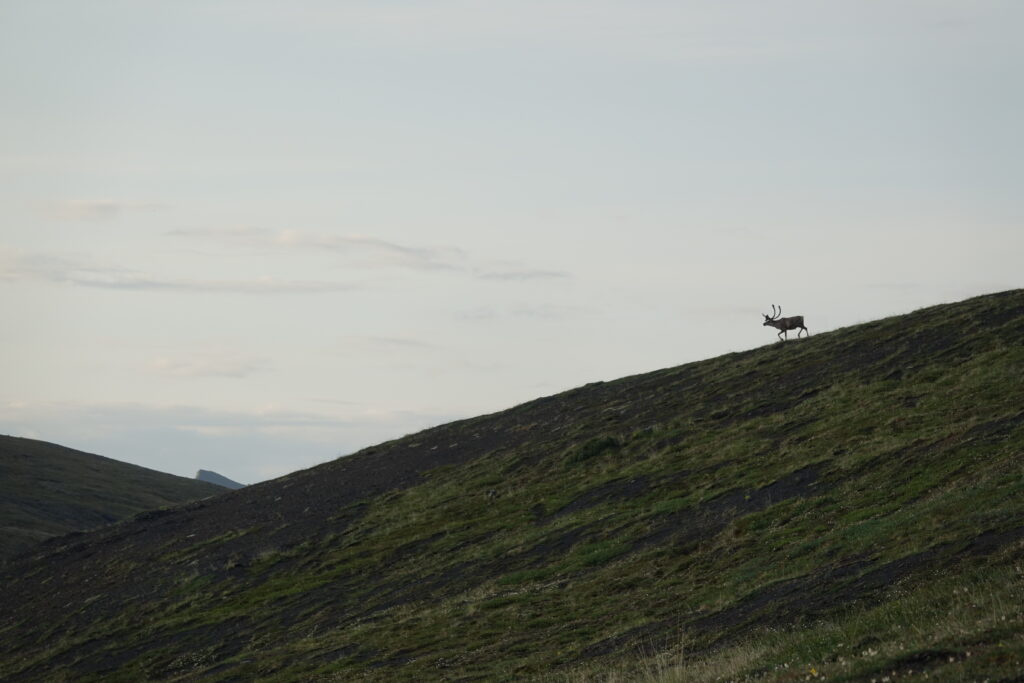
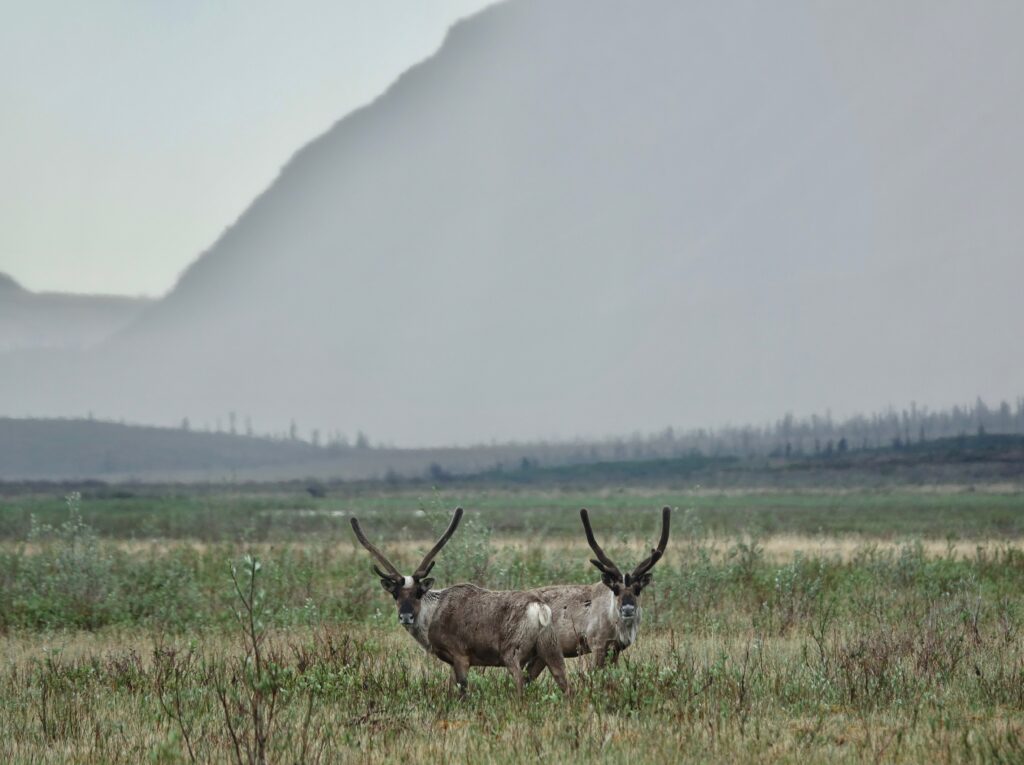
I was camped in the mountains of the western Brooks Range when I heard something big approaching in thick fog. There was a decent chance it was a grizzly, so I quietly unzipped my tent and crouched, ready with my pistol.
“I’m here,” I spoke, squinting into the gray.
The animal exhaled, paused for a few moments, then continued towards me. Antlers, followed by the rest of a big bull caribou, appeared. He was followed by two more equally impressive bulls. They passed by just a few yards away.
For thousands of years, caribou have been feeding, clothing and sheltering people around the circum-polar north. In Alaska, there are 31 different herds of caribou, each recognized by their calving grounds. Herds range in populations from double digits, like the Fox River herd, to over 100,000 animals, like the Western Arctic Herd. The three bulls I encountered were most likely part of the Western Arctic Herd, which undertakes one of the longest migrations made by any terrestrial mammal — through some of the wildest, most intact country left on earth.
In this blog we will take you through the seasons and migration of the Western Arctic Herd.
Spring
The Western Arctic Herd’s home range consists of around 140,000 square miles and is shared by about 40 communities, which depend on caribou as an important food source and on a deeply cultural level. Each spring, female caribou lead the migration from their wintering grounds on the Seward Peninsula, Nulato Hills and the upper Kobuk and Koyukuk Watersheds. The cows, followed by yearlings and a few stray bulls, head north across snow covered tundra and valleys, over the Brooks Range to the Utukok Uplands. These foothills on the North Slope have long been the herd’s calving grounds, historically having fewer predators and good forage. The cows give birth in the first week of June. This coincides with when nutritious tundra plants come to life, helping mothers replenish their strength and nurse their young, as well as providing calves with high quality forage.
It is never easy to be a caribou, but they are exceptionally vulnerable during their first two weeks of life. Calves are born able to walk and can travel within a few hours, but studies have shown that it’s not uncommon for around half to be killed by predators like golden eagles, wolves and bears during their first two weeks. All the cows calving within a few days of each other, along with their search for calving areas that historically have fewer predators, increase the odds of calf survival. The Alaska Department of Fish and Game (ADF&G) writes, “Caribou ‘swamp’ predators – the cows in a herd give birth to a lot of calves in a very short period of time, essentially overwhelming predators in the area with an overabundance of food.”
Summer
It might come as a surprise to some that summer, at least from mid-June to the end of July, historically has been the most difficult period for caribou. Swarms of biting insects begin hatching around the time caribou calves have reached the two-week mark, when they are better able to avoid predators and travel larger distances.
To contend with insect harassment as well as heat, caribou form post-calving aggregations numbering from the hundreds to tens of thousands and travel to windy, colder places like the Arctic coast, or high in the mountains, where the bugs are less prolific. During this time, biologists flying aerial surveys have the best opportunity for getting a reliable population estimate of a herd.
ADF&G writes that the Western Arctic Herd’s “post-calving aggregation is different than the summer aggregation. During post-calving, at least for this herd, bulls and nonmaternal caribou are still segregated from cows with neonates (newborn calves). Then in summer (which is also called the insect season) cows and calves gather with bulls and nonmaternal caribou to form the large aggregations.”
Caribou travel more during the summer than any other season, both to evade insects and to take advantage of the seasonal forage. Around August, when frosts begin killing off insects, bands of caribou separate from bigger herds. During this time, caribou put on weight and gain strength and, as summer fades to fall, most begin migrating south.
Fall
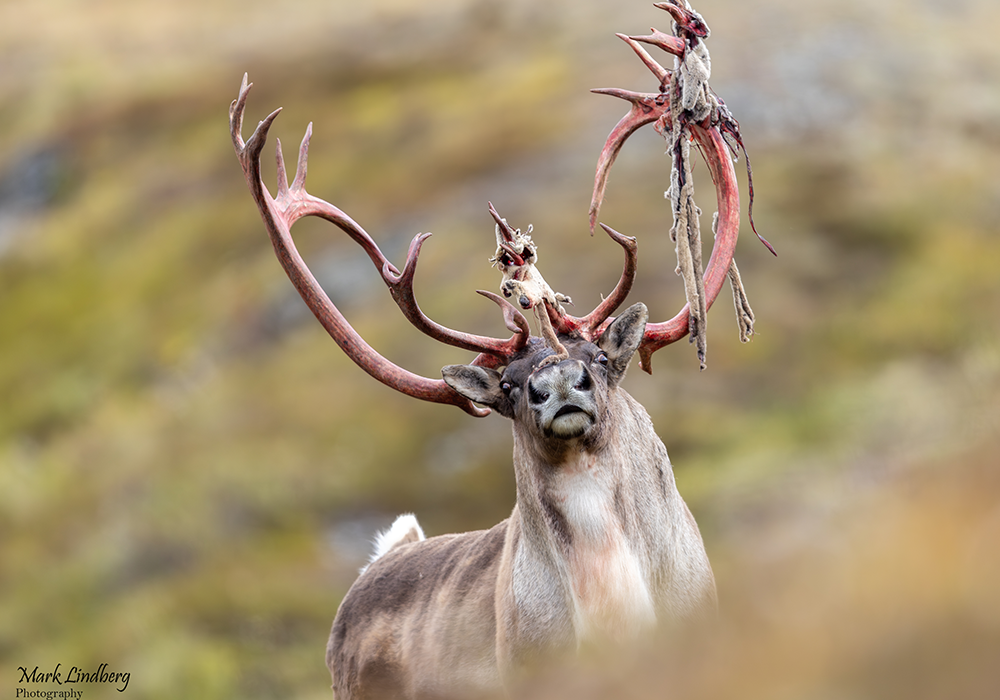
Caribou are in peak shape when the first snows of fall come. The rut occurs during September for most southerly herds in Alaska. But for northern herds like the Western Arctic Herd, September will have bulls sparring but serious fighting and mating begins around mid-October. ADF&G writes, “Unlike many other members of the deer family, bull caribou do not control a harem of cows. Instead, they control a space around themselves, and prevent other bulls from breeding females within their space.”
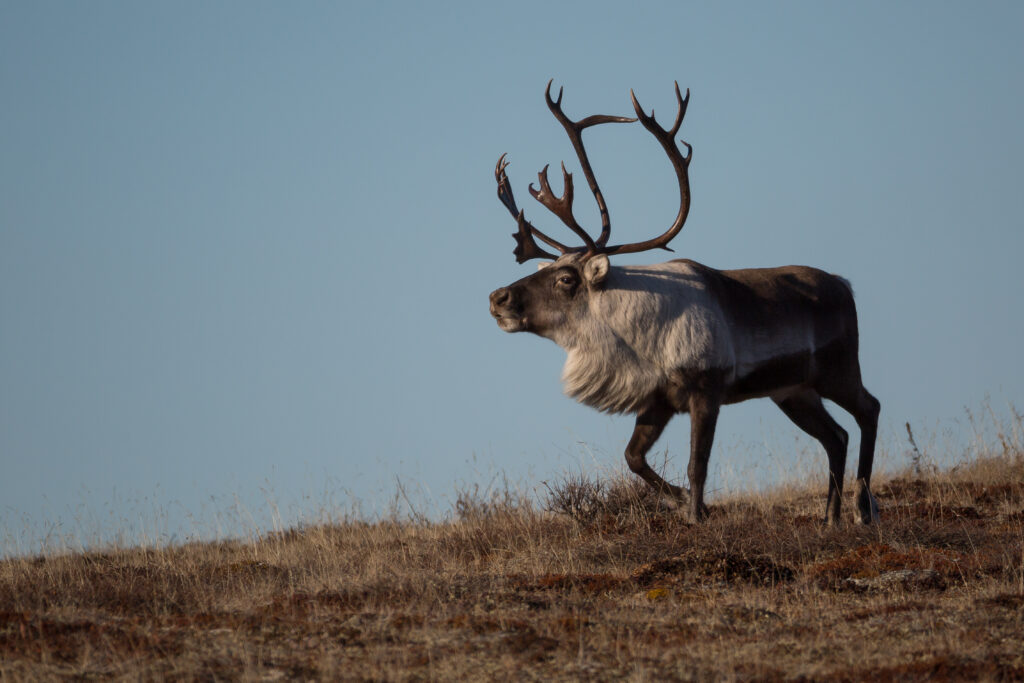
Before 2000, the Western Arctic Herd began its fall migration south in mid-August. Now, because of warming temperatures, the fall migration is not beginning until September or even later. Weather models show fall weather continuing to get warmer, which is also causing the fall caribou migration to occur later in the year. Changes in migration timing have negatively affected many villages that have historically depended on caribou. So has the decline in the herd’s population. In 2003 the Western Arctic Herd numbered nearly a half million caribou. A 2025 estimate put the herd at 121,000. In several cases the herd is no longer crossing areas locals have long relied on for harvesting caribou.
Winter
Many bulls, injured or exhausted from fighting, are killed by bears and wolves after the rut. Around then, the Western Arctic Herd returns to its winter range. Studies on collared caribou, as well as observation from communities in northwest Alaska, have shown that during the last decade more of the herd is wintering farther north. Historically, the winter season has been easier for caribou to contend with than summer. That’s changing with the Arctic warming up four times faster than the rest of the world. There are more winter rain and freeze-thaw events, making it difficult for caribou to break through the ice crust atop the snowpack and graze lichens and vegetation.
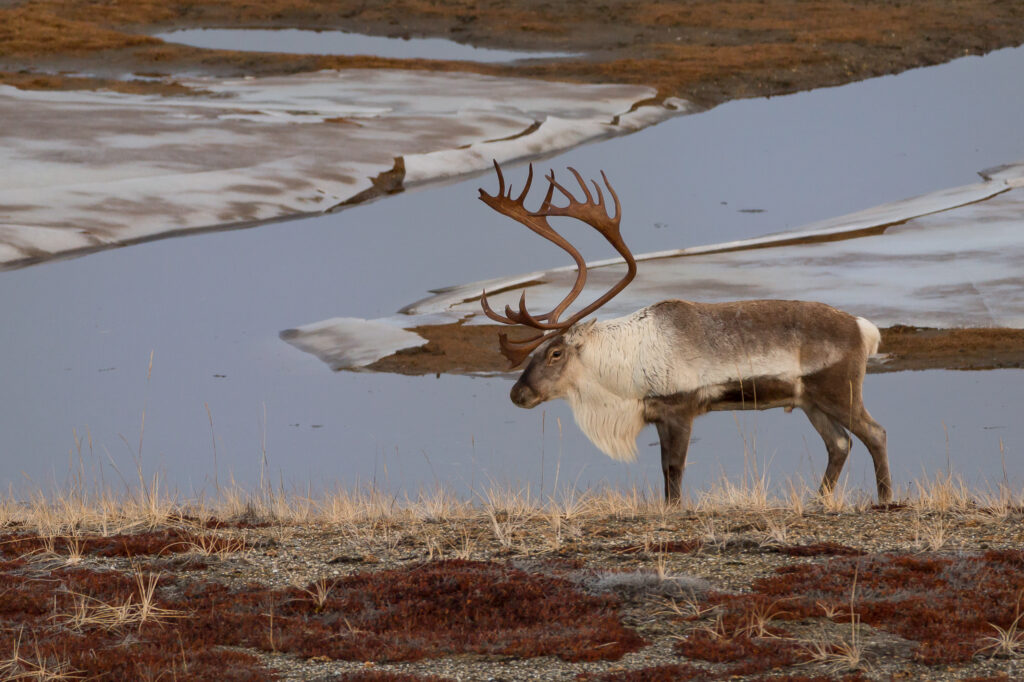
Warming temperatures have also led to the tundra’s grasses and lichens being replaced by woody plants that are less nutritious for caribou. On top of that, the longer warm season is increasing the amount of time caribou are harassed by swarms of biting insects. The effects of climate change combined with current push to develop Northwest Alaska make it clear that life for the Western Arctic Herd is not going to get any easier anytime soon.
An uncertain future worth fighting for
The Western Arctic Herd is confronting multiple pressures at once. Rapidly changing arctic conditions and industrial development like the proposed Ambler Road, a 211-mile industrial corridor to facilitate the development of an unknown number of mines and fragment much of the Herd’s range, have a lot of people concerned about the future of caribou.
The 2024 National Ocean and Atmospheric Administration’s Arctic Report Card shows that the world’s caribou population has declined by 65% during the last two to three decades. A team of researchers analyzing fossil and climate data going back 21,000 years found that caribou are facing a greater decline right now than at any point in that timeline. The researchers predicted that unless meaningful action is taken, by 2100 there will be a 58% population decline of caribou across the globe. The future of caribou in North America looks significantly worse, with an 84% decline.
I’ve experienced few things in the natural world as awe-inspiring as caribou migrations — but until a decade ago, it was something I took for granted. Now I know better. If we want caribou not to go the way of the buffalo, it’s going to take hunters and anglers uniting on their behalf.
Visit Hunters & Anglers for the Brooks Range to learn more.